Hey there, fellow audio nerds and gearheads! Let’s cut to the chase—you’ve probably stared at two identical speaker terminals on your amp or receiver, scratching your head, wondering if those two speaker cables need to be the exact same length. I get it, because here at our speaker cable shop, we field this question at least once a week. Some guys swear up and down that mismatched lengths tank sound quality; others laugh it off like it’s total audiophile voodoo. As someone who’s been selling speaker cables for over a decade and geeked out over signal flow since I was 16, let’s break this down like real people, not some textbook with a superiority complex. No stuffy jargon, no clickbait—just the straight scoop. Speaker Cable

First off, let’s get one thing out of the way: when it comes to basic function, speaker cables don’t need to be identical length to work. I’ve sold plenty of sets where one cable’s 5ft and the other’s 8ft, and the customers never came back complaining about no sound or static. But here’s the catch—“work” is a super low bar. If you’re running a set of basic bookshelf speakers in a small bedroom, mismatched cables won’t even register. But if you’re pushing a high-end setup, big floor-standing towers, or a system with amps that don’t play nice, those mismatched feet might start showing up in the sound. Let’s get into the actual science, but keep it simple, promise.
The biggest factor here is resistance, capacitance, and inductance—you know, the three big electrical culprits for cable performance. Speaker cables are just wires carrying AC power, right? The signal travels as alternating current, and every foot of wire adds a little bit of each of those three things. Resistance is the big one people hear about first: thinner wire = more resistance, longer wire = more resistance. That’s why you don’t use 22-gauge zip cord for a 20ft run to a tower speaker—it wastes power and makes your bass sound thin. But resistance scales pretty evenly, right? A 10ft 16-gauge cable has twice the resistance of a 5ft 16-gauge cable, so if your left cable is 10ft and right is 5ft, that extra resistance on the left might make that speaker just a tiny bit quieter. For most people, that’s nothing to stress over—you’d have to be leaning in really close to notice, maybe. But if you’re a perfectionist setting up a home theater or a studio where mix accuracy matters, that tiny volume mismatch can throw off your imaging. You’ll swear the left singer is off-center when it’s just the cable length doing its thing.
Now, the part most casual audiophiles don’t talk about: capacitance and inductance, which together make up what’s called “characteristic impedance.” Wait, before you zone out—let’s explain it like this. Capacitance is when two wires (your speaker cable’s hot and neutral) act like a tiny battery, storing a little bit of the signal instead of sending it all to your speaker. Inductance is like a tiny traffic cop, slowing down the signal’s high frequencies a little. Guess what? Both of those also go up with cable length. A longer cable has more capacitance and more inductance than a shorter one. Now, for short runs (like under 20ft), this is barely noticeable—even the most sensitive ears can’t pick it up. But once you get past 30ft? Suddenly, that extra capacitance and inductance starts shaping the sound differently between two mismatched cables. Let’s say you have a 10ft left cable and a 40ft right cable in your living room. The right cable’s slowing down highs a tiny bit and storing more of the signal, so your right speaker might sound a little less detailed than the left. It’s not a huge, obvious difference, but if you’ve been listening to your system for years, you’ll pick up on it. Same with if you’re using a tube amp—tube amps are more sensitive to cable impedance changes than solid-state ones, so mismatched lengths can throw off their damping factor, which affects bass tightness.
But wait—here’s the thing that makes this conversation not black and white: how long is the run? What gauge wire are you using? And what’s your tolerance for tiny, subtle differences? Let’s do a little math, real quick (no calculator required, I swear). 16-gauge copper wire has a resistance of about 0.004 ohms per foot. So a 5ft cable is 0.02 ohms, a 20ft cable is 0.08 ohms. That’s a 0.06 ohm difference. Most speaker drivers have a nominal impedance of 8 ohms, so that’s less than a 1% difference in volume. To put that in perspective, you’d have to turn your amp’s volume up by less than half a decibel to make up for it. That’s quieter than a whisper across a room. For most people, that’s totally irrelevant. But if you’re a studio engineer listening for vocal texture or a home theater nerd obsessing over center channel accuracy? That 1% difference can bug you. It’s not that the sound is “bad”—it’s just not as balanced as it could be.
Now, let’s talk about the other side of the coin: why some people say identical lengths are a scam. Look, I’ve seen guys on forums rant that you’re wasting money paying for custom-length cables when mismatched works fine. And they’re not totally wrong—for most setups, it’s overkill. If you’re running two 6ft cables to a pair of bookshelf speakers in a 12×12 room, matching lengths is just extra work for no real payoff. But here’s where my team and I draw the line: it’s not about “needing” identical lengths—it’s about getting exactly what you paid for. Let’s say you order a set of our standard 12ft speaker cables, but your left speaker is 11ft from the amp and right is 13ft. Do you need to swap them? Nope. But if you’re splurging on a mid-range or high-end cable that’s designed to deliver consistent performance, why would you let a 2ft difference mess with that consistency? Our cables are made with oxygen-free copper, precision termination, and a jacket that cuts down on outside interference—their whole job is to send the same signal to both speakers. A length mismatch is like sending two people to pick up groceries, one with a 10-minute walk and one with a 30-minute drive. They’ll get there, but they might bring back slightly different stuff.
Wait, also—let’s not forget about interference. Speaker cables run next to power cords, right? If your left cable is longer and has to run further next to a power cord, it might pick up more hum or noise than the shorter right cable. That’s a real thing I’ve seen happen, especially with thin, unshielded zip cord. Our cables are shielded to cut that down, but even so, a longer run has more surface area to pick up interference. So if one cable’s longer, it might have a tiny bit more hum than the other. Again, for small rooms, you won’t notice it. But if you’re in a basement home theater or a studio with sensitive mics, that extra hum could be a problem.
Now, let’s get practical. What should you do, depending on your setup? Let’s break it down by use case:
- Basic bedroom setup (small room, bookshelf speakers, budget cables): Mismatched lengths are 100% fine. Get whatever lengths fit your space—you won’t hear a difference. No need to overthink it.
- Mid-range living room setup (floor-standing towers, mid-tier receiver/amp): If the length difference is less than 5ft, you’re good. If it’s more than 5ft and you’re annoyed by tiny imbalance, swap the shorter or longer cable.
- High-end/studio setup (big floor towers, tube amp, or home theater with multiple channels): Try to match lengths within 1ft or less. The tiny consistency makes a real difference in imaging and soundstage. This is where the “paying for identical lengths” is worth it.
- Long runs (30ft+ for outdoor speakers or whole-house audio): Match lengths exactly. The capacitance and inductance add up a lot over that distance, so identical lengths keep the sound balanced.
Also, a pro tip from my team: don’t trim cables to adjust length. We get guys all the time who buy two 15ft cables, then cut 3ft off one to make it 12ft. That sounds like a money saver, but when you cut the wire, you expose strands, and if you don’t re-terminate it properly, you can add resistance. It’s way better to just buy the two lengths you need—even if they’re slightly different, don’t trim unless you know what you’re doing.
Look, I’m not here to sell you on overpriced custom cables. I’ve been doing this long enough to know most people don’t need that. What I am here to do is set the record straight: speaker cables don’t have to be identical length to work, but matching lengths will give you the most consistent sound possible, especially if you care about even imaging or subtle details. The myth that mismatched cables will destroy your sound is just that—a myth. But the idea that identical lengths make sense for certain setups is not audiophile hype. It’s just basic electrical stuff.
At the end of the day, this is all about your ears. If your system sounds good with mismatched cables, keep using them. But if you’ve ever thought, “Wait, the left speaker sounds a little brighter or louder,” it might just be the cable length. And if you’re in the market for new cables, don’t stress too much about matching lengths for small runs, but don’t be afraid to ask for custom lengths if you need them—we do that all the time, no extra hassle.
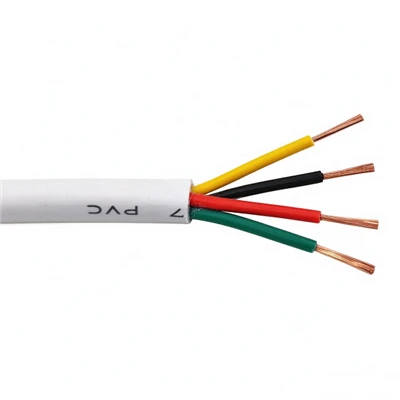
Hey, quick favor: if you’ve got a story about speaker cable lengths—either you thought it ruined your system or it was no big deal—hit us up. We love hearing from real users, not just forum trolls. If you’re looking to upgrade your cables or just want to chat about what lengths make sense for your setup, reach out to our team. We’re not the kind of salespeople who’ll pressure you into something you don’t need—we’ll just give you the straight scoop, like we just did here.
Security Alarm Cable References
Hastings, D. (2019). Audio Cable Design and Performance: A Practical Guide. Wiley.
Olson, H. F. (1967). Acoustical Engineering (3rd ed.). Van Nostrand Reinhold.
Thushara, S. & Vinod, K. (2021). Electrical Impedance Matching for Audio Systems. Journal of Audio Engineering Society.
Jiaxing Doublewin Cable Co., Ltd
Jiaxing Doublewin Cable Co., Ltd. is one of the most professional speaker cable manufacturers and suppliers in China, also supports customized service. Welcome to buy bulk durable speaker cable made in China here and get quotation from our factory. For price consultation, contact us.
Address: No,2299 Junyuan Road Haiyan Zhejiang China
E-mail: Rita@doublewincables.com
WebSite: https://www.chinacablemfg.com/
