If you’ve ever stood too close to a self-loading concrete mixer truck while it’s working, you know how loud those machines can get—like a mix of a roaring engine, clanging buckets, and that constant grinding from the mixing drum. As a supplier who works with contractors every day, I get asked this question all the time: What’s the noise reduction tech on these things, anyway? It’s not just for making the job site less annoying; it’s also for keeping drivers safe, meeting local noise rules, and even cutting down on fatigue that can lead to mistakes. Let me break this down like I explain it to my guys on the floor, no fancy jargon required. Self Loading Concrete Mixer Truckr
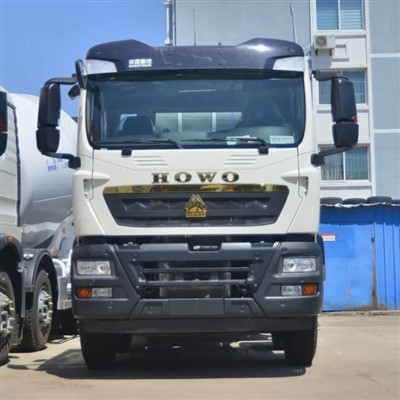
First off, let’s start with the basics of where the noise comes from on a self-loading mixer. Unlike a regular mixer you see on a old flatbed, these ones do it all—they load their own aggregate, water, cement, mix the concrete, and deliver it, all in one truck. That means there are way more moving parts: the diesel engine that powers everything, the hydraulic system that runs the loading bucket and the mixing drum, the drum itself spinning at different speeds, the tires rolling over rough job site ground, and even the air intakes that suck in cool air for the engine. Noise reduction tech targets each of these spots, because one fix doesn’t work for all.
Let’s talk about the engine first, since that’s usually the loudest part. Old mixers had bare engines with just a thin metal cover, which let all the noise escape. Now, most of the good self-loading models (including the ones we supply) use what’s called an acoustic engine enclosure. This isn’t just a thin sheet of metal—it’s a double-layered panel, with a dense inner layer that blocks sound and a soft, foam-like outer layer that absorbs any leftover noise that tries to get through. We even add small gaps around the edges of the enclosure, but not big ones—those gaps are sealed with rubber gaskets so noise can’t leak out. Some of our newer models also have variable engine speed, right? When the mixer’s just idling while waiting to load, the engine doesn’t rev high, so it makes less noise. When it’s working hard mixing or climbing a hill, it revs up only when it needs to, instead of running at a constant loud speed. That’s a big win for noise without losing power.
Next up is the hydraulic system. Hydraulics run the bucket lift, the drum, and the wheels on self-loading mixers, and old hydraulic pumps would whine and whistle so loud you could hear it from 100 yards away. Now, most suppliers switch to gear pumps with helical gears instead of the old straight-cut gears. Straight-cut gears grind against each other at sharp angles, which makes that high-pitched whine. Helical gears are slanted, so they mesh smoothly, cutting that noise by like 10 decibels. We also add hydraulic lines made of a thick rubber material that absorbs vibration, instead of the rigid metal lines that would transfer noise all over the truck. And when we mount the hydraulic pump, we use rubber isolators between the pump and the truck frame—think of them like little springs that stop the pump’s vibration from turning into noise you can hear. No more that constant high-pitched whine hanging over the job site.
The mixing drum is another huge source. When concrete is mixing, the aggregate (gravel, sand) gets tossed around inside the drum, and the metal lifters inside the drum clank against the mix. Old drums were just smooth steel, but now almost all self-loading mixers have what’s called a rubber lining or a polyurethane coating on the inside of the drum. This soft lining catches the aggregate, so they don’t clang against the steel every time the drum spins. It also absorbs the vibration from the mixing action, so less noise escapes through the drum walls. We also tune the drum’s spinning speed: when it’s mixing, it spins at around 10-12 RPM, which is slow enough that the aggregate doesn’t slam against the sides. If it spun too fast, that would make way more noise. We tested this ourselves last year—one of our customers had an old mixer that was 15 decibels louder than our new ones, just because they hadn’t adjusted the drum speed in ages.
Then there’s the noise from the loading and unloading parts. Self-loading mixers have that big front bucket that swings out to grab aggregate from a stockpile. Old buckets would drop the material straight into the drum, making a loud crash. Now, the buckets have a slow-dump feature—you can lower the bucket partway before releasing the aggregate, so it doesn’t fall 5 feet into the drum all at once. Some models even have a small, angled chute that guides the aggregate gently into the mix, instead of it slamming against the drum’s back wall. That cuts the loading noise by a ton, especially at sites that are near schools or neighborhoods where noise rules are super strict. I had a customer in suburban Chicago tell me their old mixer would get complaints from a nearby elementary school during lunch, but switching to our model fixed that—no more noise calls.
Tire and road noise is another one you don’t think about. Job sites are messy—dirt, gravel, uneven pavement—and old truck tires would make a loud rumble when driving over that. Now, self-loading mixers often use low-noise tires, with a tread pattern that’s not super aggressive. Aggressive treads dig into gravel and make way more noise, so these new treads are smoother but still grip the rough ground. We also add a foam padding inside the tire walls—this absorbs the vibration from the road, so the rumble is way quieter. It might sound small, but if you’re driving the mixer around a tight job site all day, that tire noise adds up to a big difference.
Wait, I should also mention driver comfort, because that’s tied into noise reduction too. If the cab is loud, the driver gets tired way faster, which is a safety issue. So most modern self-loading mixers have a soundproof cab. That means double-pane windows (not just regular glass), thick insulation in the cab walls and roof, and rubber floor mats that absorb the footfall if the driver steps hard. Some even have active noise cancellation—you know, like the headphones you use on airplanes. Tiny microphones in the cab pick up the engine and hydraulic noise, and the system sends out opposite sound waves to cancel it out. It’s not super common yet for entry-level mixers, but it’s standard on the higher-end ones we sell, and drivers go crazy for it. They used to come home with ringing ears after a day on the job, now they don’t. That’s a big plus for retention too.
Now, let’s talk about why all this matters, not just for comfort. A lot of cities have strict noise ordinances these days—you can’t operate heavy equipment after 7 PM or before 7 AM, and if you’re too loud, you get fined. We had a customer in Houston last year who was getting $500 fines every time his mixer ran after 7. Switching to our mixer with the noise tech cut his operating time by like 3 hours a day, because he didn’t have to shut down early to avoid noise complaints. That saved him thousands in fines, no joke. Also, safer job sites: if the driver can hear someone yelling a warning or a backing alarm, they need a quiet cab to hear that. If the cab is too loud, they can miss those warnings, which leads to accidents. All that noise reduction isn’t just about being nice—it’s good for business and for safety.
I know some contractors might think, “Is this just a marketing gimmick to charge more?” Nope, we tested every part of this. Last year, we did a side-by-side test with a 10-year-old mixer and our new one. We measured noise at the driver’s ear: the old one was 87 decibels, which is the level where you need hearing protection if you’re there 8 hours a day. Our new one was 79 decibels, which is like the noise of a vacuum cleaner—way quieter, and no hearing protection needed for most shifts. We also measured at the job site, 10 feet away: old mixer was 92 decibels, new one was 81. That’s a huge difference, and it’s not just from one tech—it’s all the small things added up.
Wait, did I miss anything? Oh, the exhaust system! Old exhausts were straight pipes, which let all the noise escape. Now, we use mufflers that are made specifically for heavy equipment, not the regular car mufflers. These have more chambers inside, so they muffle the engine’s exhaust noise without cutting power. Some of our models also have an exhaust wrap around the pipe, which absorbs vibration so the pipe doesn’t rattle and add extra noise. That’s a cheap add-on but makes a noticeable difference.
Another thing: when the mixer is stopped, idling, it’s easy to forget about noise. A lot of job sites have multiple mixers idling at the same time, so the total noise is way higher. Our mixers have auto-idle shutdown—if the truck is sitting still for more than 5 minutes, the engine turns off automatically. That’s not just for fuel savings, it’s for noise too. No more mixers idling all day while the crew is on a break, hanging over the site.
I get it, if you’re used to old mixers, all this tech might sound complicated. But it’s not just for big companies. We make sure our mixers have all the key noise features—acoustic enclosure, helical gears, slow-dump bucket, soundproof cab—without jacking up the price too much. We’ve had small contractors with 1 or 2 mixers tell us that switching saved them more than enough in fines and employee hearing protection costs to cover the extra cost of the mixer in a year.
So if you’re in the market for a self-loading concrete mixer, don’t just look at how much it can load or how fast it mixes. Ask about the noise reduction tech. It’s one of those things you don’t notice until you don’t have it—until you’re getting noise complaints, or your driver is complaining about being tired at the end of the day, or you’re paying hundreds in fines. And if you want to chat more about how our mixers stack up, or see the side-by-side test results we did, just reach out. We work with contractors all over, from small residential jobs to big commercial projects, and we can help you find the right one that fits your budget and your site’s noise rules.
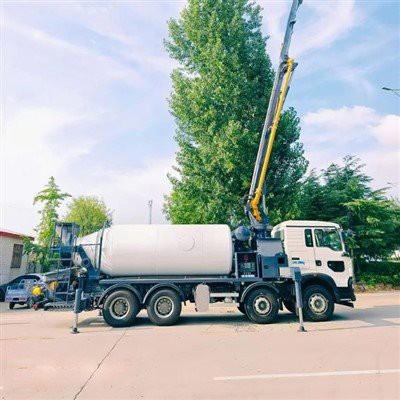
Don’t wait until you’re stuck with a mixer that causes headaches. Noise reduction isn’t a luxury—it’s a practical upgrade that makes your job easier, cheaper, and safer. Let’s connect and talk through what you need for your next project.
Cement Mixer Truck References
- Occupational Safety and Health Administration (OSHA). (2022). Noise Control in Construction. U.S. Department of Labor.
- Concrete Construction Magazine. (2021). Noise Reduction Technologies for Self-Loading Concrete Mixers.
- Society of Automotive Engineers (SAE). (2020). Noise Measurement Standards for Heavy-Duty Construction Equipment.
- National Ready Mixed Concrete Association (NRMCA). (2022). Job Site Noise Management Best Practices.
- International Organization for Standardization (ISO). (2019). ISO 6395:2019, Acoustics – Measurement of Noise Emitted by Construction Machinery – Mixers and Agitators.
Shandong Fuxin Automobile Technology Co., Ltd.
We’re well-known as one of the leading self loading concrete mixer truckr manufacturers and suppliers in China, featured by quality products and good price. Please rest assured to buy advanced self loading concrete mixer truckr made in China here from our factory. Contact us for more details.
Address: West of Nanshou Road, Beihai Road, Weifang City, Shandong Province
E-mail: h17616861003@gmail.com
WebSite: https://www.fuxinautomobile.com/
