If you’ve ever dug into how automation, industrial machinery, or even some everyday gadgets work, you’ve probably heard the term “solenoid coil” thrown around—but let’s cut through the jargon, because if you’re here asking what a push type solenoid coil is, you’re likely either someone new to working with these parts, or maybe you’re tired of sifting through generic supplier pages that talk in circles. As a solenoid coil supplier, I talk about these parts with engineers, small-batch machine builders, and even hobbyists every single day, and trust me: push type solenoid coils are one of the most versatile workhorses you can get for push-pull motion applications. Let’s break this down like we’re chatting over a coffee, no stuffy technical hoops. Solenoid Coil
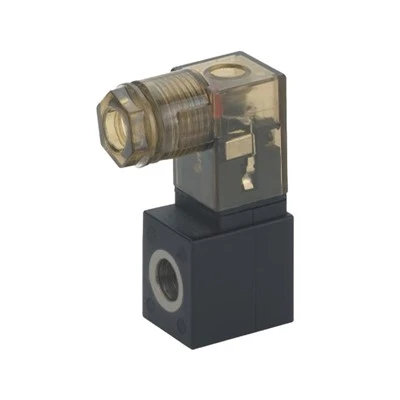
First, let’s start with the basics: every solenoid is, at its core, an electromagnet wrapped around a metal core (usually steel) that creates a magnetic field when electricity flows through the coil. Now, “push type” just tells you how the linear motion of that metal core (we call that the plunger or armature) works. Unlike pull type solenoids that yank the plunger toward the coil, push type solenoids are designed to push the plunger outward, away from the coil, when voltage is applied. That’s the key difference, and it makes them perfect for jobs where you can’t pull something toward you—like pushing a door latch open, advancing a component on a conveyor, or triggering a small valve to release material from a hopper.
Wait, let’s get specific about the build, because that’s what makes push type coils different from their pull cousins. The armature in a push type solenoid isn’t just a free metal rod hanging inside the coil bore; it’s usually fitted with a shoulder or a stop at the end closest to the coil. When electricity hits the coil, the magnetic field pulls the armature back into the bore until that shoulder hits a washer or the end of the coil housing, and that’s the push force you get. No fancy extra parts—just a well-wound coil, a precision-machined armature, and a housing that keeps the magnetic field focused so you get maximum force at the right stroke length.
Let’s talk use cases, because that’s where push type coils really shine. I’ve supplied these to packaging companies for small pusher mechanisms that move boxes along a line when a sensor triggers it, to agricultural equipment makers for seed-metering systems that push individual seeds into the soil without jamming, and even to toy manufacturers for moving parts in large industrial play sets (yes, those actually use heavy-duty solenoids). They’re also common in medical devices, like portable diagnostic tools that need to push a sample tray into place, because they’re compact, fast to actuate (most react in 10–50 milliseconds), and way more reliable than tiny pneumatic cylinders for short, one-directional moves.
Now, why would you pick a push type over any other solenoid? Let’s weigh the pros, because I don’t want to sell you something that doesn’t fit your needs. First, stroke length: most push type coils are made for short strokes, usually 5mm to 25mm, which is exactly what you need for most push-pull tasks—no extra, unused stroke that adds bulk to your machine. Then, force: depending on the size and voltage, you can get anywhere from 2 newtons (about half a pound) up to 500 newtons (over 110 pounds) of push force, so there’s a model for tiny consumer gadgets and heavy industrial gear alike. They’re also pretty low-maintenance—no seals to replace, no hoses to leak, just connect power and go, as long as you size them right.
The big caveat? They’re not made for pulling. If you need to drag something toward the coil, a push type won’t work—you’ll need a pull type or a bi-stable solenoid that can do both. Also, because they’re designed for short, fast actuation, running a push type coil continuously (holding voltage for more than a few seconds) will overheat it. Most of these are intermittent-duty, meaning they’re meant to turn on, push the load, and turn off again—perfect for automated cycles, not for holding a part in place all day. If you need hold force, we can talk about bi-stable push solenoids, but that’s a different conversation.
Now, let’s get into something that a lot of first-time buyers don’t ask about: how to size a push type solenoid coil that actually works for your project. I see so many people grab the first coil they find online and end up with something that’s too weak, too bulky, or burns out in a week. Here’s the quick checklist I go through with every customer: first, how much force do you need? Don’t just guess—calculate the weight of the part you’re pushing plus any friction from guides or grooves. For example, if you’re pushing a 10-pound part with 2 pounds of friction, you’ll need at least 12 pounds of force from the solenoid, and we usually add a 20% buffer to account for wear over time. Second, stroke length: measure exactly how far the plunger needs to move—no extra, because a longer stroke means less force, all else equal. Third, voltage: most of our standard push type coils run on 12V DC or 24V DC, which are safe for most industrial and consumer circuits, but we also do custom 120V AC coils for high-force industrial applications. And last, environment: if it’s going to be outside, in a dusty factory, or in a medical setting that needs cleanliness, we have IP65-rated coils with sealed housings to keep debris out.
Wait, let’s be real for a second—solenoid coils are not one-size-fits-all, and I get that. A lot of suppliers will push a generic coil that’s “close enough,” but that leads to downtime, which is a nightmare for anyone running a production line. As a supplier, we don’t do that. We work with our customers to tweak things: if you need a custom stroke, a special mount, or a specific voltage for a tight fit, we can make that happen. Last year, we had a small machinery builder who needed a push type coil that fit into a 10mm tight space and had a 10mm stroke—our standard models were too big, so we machined a custom housing and rewound the coil to keep the force high enough for their application, and it’s been running flawlessly for them for 18 months now. That’s the kind of service we care about, not just selling a part and forgetting about you.
Another common question: what’s the difference between a push type solenoid coil and a regular solenoid coil? The easy answer is that all solenoids have a coil, but the push type is specifically designed for outward linear motion. A standard pull type solenoid will technically push a tiny bit if you hook the plunger to something beyond its stop, but that’s not engineered for it—you’ll get way less force, and it’ll wear out fast. Push type coils have optimized magnetic circuits to concentrate the force outward, so you get consistent, reliable push without damaging the coil or the load.
I should also mention durability, because that’s non-negotiable for most of our customers. Our standard push type coils use high-grade copper wire (not aluminum, which is cheaper but corrodes faster) and steel cores that are heat-treated to resist wear from repeated actuation. We test every batch for continuity and force, and we offer a 1-year warranty on all our standard coils, so you know you’re getting a quality part, not a cheap off-brand that’ll burn out after a hundred cycles. For custom orders, we do more rigorous testing, like temperature cycling and load testing, to make sure they hold up to your specific use case.
Now, let’s talk about when you’d actually use one vs. other linear actuators, because there are a lot of options out there. If you’re comparing push type solenoids to pneumatic cylinders: solenoids are faster (milliseconds vs. seconds for air cylinders), cheaper for short runs, and don’t need a compressor or air lines, so they’re way simpler to install. If you’re comparing to electric linear motors: solenoids are smaller, lower-cost for light to medium force, and perfect for on/off actuation, whereas linear motors are better for precise, variable motion. Push type solenoids hit that sweet spot for most automated, push-only applications.
Okay, let’s wrap this up, because I know you’re probably here because you’re either planning a build, fixing a machine, or sourcing parts, and you need a clear answer. A push type solenoid coil is an electromechanical part that uses electricity to create a magnetic field, pushing a metal plunger outward to move a load—designed specifically for outward linear motion, reliable, compact, and ideal for short, fast automated tasks. It’s not the right part for every job, but for the right one, it’s unbeatable.
If you’re working on a project right now, and you need a push type solenoid coil that fits your exact needs, feel free to reach out. We don’t do hard sells—just bring us your specs (force needed, stroke length, voltage, any environment notes) and we’ll help you pick the right standard model or build a custom one that works for you. No generic quotes, no hidden fees, just straight-up help getting a part that’ll do the job right.
Pneumatic Cylinder References
- Bolton, W. (2017). Electromagnets and Solenoids: Design and Application. Newnes.
- National Electrical Manufacturers Association (NEMA). (2020). Standards for Linear Solenoid Actuators.
- Industrial Machinery News. (2022). Common Actuator Technologies for Industrial Automation.
- Swenson, J. (2021). Linear Motion Components for Packaging and Conveyor Systems. Manufacturing Engineering Magazine.
Zhejiang Jiasheng Electronics Technology Co., Ltd.
With over 20 years’ experience, we are one of the most professional solenoid coil manufacturers and suppliers in China. We warmly welcome you to buy bulk high quality solenoid coil in stock here and get pricelist from our factory. We also accept customized orders.
Address: Building 5, No.277 Weiqi Road, Yanpen Subdistrict, Yueqing City, Wenzhou City, Zhejiang Province, China
E-mail: sales@cnjskj.com
WebSite: https://www.huangcoilworks.com/
