Hey there! If you’ve been scrolling for a used electric scissor lift price breakdown and landed here, odds are you’re either a job site manager, a small contractor tired of dropping cash on new equipment, or someone who’s heard these lifts are game-changers for indoor work but has no clue what to actually pay for a used one. I’ve been supplying electric scissor lifts for over six years now, and I get DMs every single week asking, “How much is a used one, anyway?” So let’s cut through the vague Google results and actually talk numbers—no fancy jargon, just real stuff I see every day. Electric Scissor Lift

First off, let’s get one thing straight: a used electric scissor lift isn’t the same as a beat-up pickup truck you’d buy from your cousin. These things work 40+ foot in the air, so their value hinges on way more than how many miles (or hours, duh—they run on batteries, not gas) they’ve clocked. I see folks guessing “$5k to $20k” and that’s true, but it’s so broad it’s useless. Let’s break it down by the biggest factors that change the price, because that’s what actually matters when you’re budgeting.
First up: Hours and Condition. This is the big one. New electric scissor lifts usually have a 1,000-hour or 5-year warranty, right? So if a unit has under 500 hours, that’s basically baby years—hardly used, maybe only rented for a couple small office jobs. A 2019 unit with 300 hours? That’ll run you around $8k to $12k, depending on the brand. Compare that to a 2019 unit with 1,500 hours—those are in the “workhorse” stage, no major repairs yet but they’ve put in the time. That price drops to $5k to $7k. Now, if a unit has over 2,000 hours? Yeah, it’s gonna be cheaper—like $3k to $5k—but here’s the catch: you gotta check the battery. Electric lifts run on lithium-ion or lead-acid, and a bad battery can cost $2k to replace. I’ve seen guys buy a 2,200-hour lift for $3k and walk away spending $2,200 on a new battery, so they basically paid $5.2k, which isn’t way off a lower-hour unit. Always ask for hour logs, by the way—any reputable seller (that’s me, obviously) keeps those. If someone can’t produce hours? Run.
Next, Lift Type and Max Height. This is a non-negotiable factor I see so many people sleep on. A 19-foot electric scissor lift is for drywall hanging and small warehouse work, and those are way cheaper than a 40-foot model for construction or facility maintenance. Let’s do quick, real numbers I’ve sold in the last month: 19-foot used electric lifts—under 500 hours, good condition—$4k to $6k. 26-foot models are $5k to $9k. 32-foot is $7k to $11k. 40-foot can hit $15k if it’s low hours and in top shape, or $10k if it’s been worked hard. Also, there’s narrow vs wide lifts—narrow ones for tight indoor spaces (like grocery stores or office hallways) are usually a bit more because they’re specialized, so add $500 to $1,000 on average for a narrow model of the same height.
Brand also plays a role, and it’s not just hype. The big names I supply—JLG, Genie, Skyjack—hold their value way better than off-brand no-names that some online sellers push. A used Genie 26-foot lift with 400 hours? $7k. An off-brand 26-foot lift with the same hours? Maybe $4k, but I’ve seen those break down in 6 months, costing more in repairs than you saved. Last year, a customer bought an off-brand 32-foot lift for $6k, and 3 months later the hydraulics blew—cost him $1,800 to fix. The next month he bought a used JLG with 600 hours for $9.5k, and it’s still running. Yeah, name brand costs more, but it’s less risk. I can’t stress that enough—used equipment is all about reliability, not just the sticker price.
Then there’s extras and recent service. If a used lift has new tires, new hydraulics, or a fresh battery? That adds value. Last week I sold a 2020 Genie 32-foot lift with 800 hours—new batteries, new tires, full service done 2 months prior—for $10,500. A similar unit with no extras would’ve been $8.5k, so that extra $2k was worth it for the buyer because they didn’t have to do anything when they got it. Also, if a lift has features like non-marking tires for indoor work or a quick-deploy mast? That bumps the price too—usually $500 to $1,500, depending on the feature.
Now, let’s talk about the weird stuff that messes with prices. Supply and demand, for one. If there’s a construction boom in your area, used lifts get more expensive—last spring, 19-foot used lifts in the Dallas area were up $1,000 because everyone needed them for interior work. Seasonality also hits: most people buy lifts in spring, so prices are higher then, and they sell less in winter, so you can negotiate a better deal November to February. Also, local regulations—some areas require lifts to pass safety inspections before sale, so units that have proof of inspection cost a bit more, but you avoid the hassle of getting it done yourself.
Wait, let’s clear up a common myth: used vs new electric scissor lifts. A new 26-foot electric scissor lift costs around $20k, right? So a used one that’s 3-5 years old with under 1,000 hours is 1/3 to 1/2 the price of new, which is why so many small businesses go that route. But if you’re buying a lift for occasional use—like one or two projects a year—you might even consider renting, but if you need it for regular work, buying used is a no-brainer.
Now, what about the deals to avoid? I see them all the time: $1,000 used electric scissor lifts online. That’s a scam, or it’s a broken unit that needs thousands in parts. Or a unit with no hour logs, no service history—you have no idea how it was treated. Last month I had a customer come to me after buying a $2,500 lift from a random seller, and the motor was shot, the hydraulics leaked, and they had to dump it after a week. So if a price is way too good to be true, it probably is.
So, putting all this together, what’s the average price you can expect to pay right now (2024)? For a reliable, named-brand used electric scissor lift: 19-foot, under 1,000 hours, good condition: $4,500 to $6,500. 26-foot, under 1,200 hours: $6,500 to $9,500. 32-foot, under 1,500 hours: $9,000 to $13,000. 40-foot, under 1,800 hours: $12,000 to $18,000. If you’re open to higher hours, knock off $1,500 to $2,500, but make sure you get a pre-purchase inspection (I always recommend that—$200 is nothing compared to a $2k repair).
If you’re shopping for a used electric scissor lift, don’t just look at the price tag. Ask for hour logs, service records, proof of any recent repairs, and run the VIN (yes, scissor lifts have VINs!) to check for any outstanding accidents or recalls. And if you’re working with a supplier, make sure they offer some kind of warranty—even a 30-day parts guarantee is better than nothing, because it shows they stand behind their equipment.
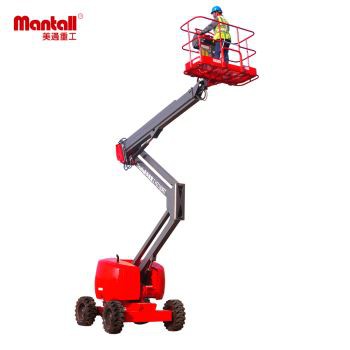
At the end of the day, the price of a used electric scissor lift isn’t a random number—it’s tied to how much life is left in the machine, how reliable it’ll be for your work, and what you need it to do. I’ve helped hundreds of contractors and facility managers pick the right used lift for their budget, and I’d be happy to chat through your specific needs—whether you need a small lift for office maintenance or a big one for construction. Reach out anytime to pick my brain, no pressure at all.
Diesel Scissor Lift References:
- Association of Equipment Manufacturers. (2023). Used Heavy Equipment Value Guide.
- National Rental Association. (2024). Scissor Lift Market Report.
- JLG Industries. (2023). Electric Scissor Lift Maintenance and Value Retention.
- Genie by Terex. (2024). Used Equipment Specification and Pricing Data.
- Occupational Safety and Health Administration. (2023). Aerial Lift Safety Standards for Used Equipment.
Mantall Heavy Industry Co., Ltd.
Mantall Heavy Industry Co., Ltd. is well-known as one of the leading electric scissor lift manufacturers and suppliers in China, featured by quality products and good service. Welcome to buy discount electric scissor lift made in China here from our factory. For pricelist and quotation, contact us now.
Address: NO.62, Binhai Avenue, Binhai Industrial Park, Qidong City, Jiangsu Province, China
E-mail: Gloria@mantall.com
WebSite: https://www.mantallawp.com/
