If you’ve ever shopped around for a 5 axis machining center, you’ve probably noticed that there’s no one-size-fits-all answer when someone asks, “What’s the table size?” I get it—for guys like you who actually run machine shops or engineer tight-tolerance parts, table size isn’t just a number on a spec sheet; it’s the difference between nailing that big aerospace bulkhead you’ve been waiting for and having to farm the job out because your machine just won’t fit. As a supplier who’s been building and selling 5 axis machines for 12 years, I’ve fielded this question a hundred times, and I’m here to break it down like we’re chatting over a cold coffee, not in a stuffy sales meeting. 5 Axis Machining Center
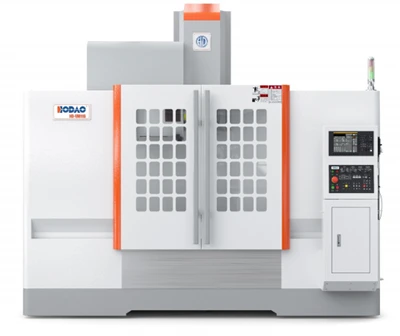
First, let’s clear up a common mix-up: the “table size” people talk about is almost never just the flat surface you bolt parts down to. On a 5 axis machine, that table is mounted to what’s called a rotary axis, and it doesn’t just spin—it tilts too. So when someone says a machine has a 320mm table, they’re usually referring to the diameter of that rotary plate, not the overall working footprint. That’s the number engineers look at first because it tells you the maximum diameter of a part you can spin around the centerline without it crashing into the machine’s column or head. But here’s the catch: that number only works for simple, rotationally symmetric parts. If you’re running a long, rectangular mold base or a large turbine blade, the real limit isn’t the table’s diameter—it’s how much clearance you have when the rotary head tilts up or down.
Let’s start with the tiny machines first, because a lot of shops these days are moving to compact 5 axis setups for small batches and prototype work. If you’re making medical implants, small aerospace brackets, or injection mold inserts, you don’t need a huge table. Our most popular entry-level 5 axis has a 250mm (about 10 inch) rotary table. Wait, you’re thinking—250mm seems small, but let’s put that in perspective: most small orthopedic implants are 150mm or less, so that table gives you plenty of space for a vise and some fixturing around it. I’ve seen shops run 3 to 4 parts at a time on that table, bumping their throughput up 30% overnight. But here’s a caveat I always warn new buyers about: that 250mm number is for the rotary plate itself. If you use a standard 4-jaw chuck on it, the chuck’s profile might eat up 50mm to 60mm of the table’s edge, so your actual usable diameter for a round part is more like 190mm. That’s the fine print no one writes in big bold letters on the spec sheet, and it’s why half the calls I get are from guys who bought a machine thinking it could handle a 200mm part, only to find out the fixturing is too big.
Next, the mid-range machines—this is the sweet spot for most job shops that are growing into 5 axis work, or dedicated shops running mid-sized parts. We stock a ton of 5 axis centers here with 400mm (15.75 inch) rotary tables, and that’s where most people start to get confused about what “table size” actually means. A 400mm table sounds like it should handle parts up to 400mm, but again—rotary tilt changes everything. When the table tilts to 90 degrees (the maximum tilt for most mid-range models), the head of the machine swings out to machine the part’s sides, right? So if your part is 400mm in diameter, when the table tilts, the edge of the part will stick out past the table’s side. That sounds fine, but let’s check the Z-axis clearance: most mid-range machines have a Z-travel of 500mm, so if your part is 150mm tall, that leaves you 350mm of clearance from the table top to the head. Wait, but when you add a spindle taper, coolant lines, and tool changers, that 350mm shrinks—realistically, your maximum part height when the table is tilted is more like 300mm. I’ve had a shop try to run a 380mm turbine blade on a 400mm table, and when they tilted it, the blade’s tip hit the inside of the machine’s enclosure. That’s a $10,000 mistake on a setup you can’t redo easily, so always factor in tilt clearance, not just table diameter.
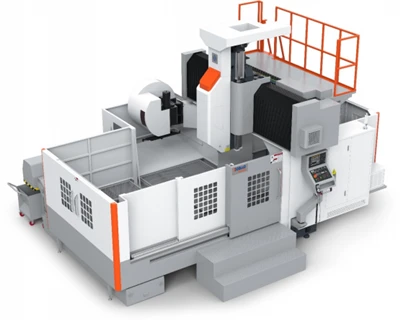
Now, the big boys—the heavy-duty 5 axis machines for large aerospace components, energy industry parts, or large mold bases. These are the ones with tables that start at 500mm (19.7 inch) and go up to 1,000mm (39.4 inch) and even bigger. I sold our first 800mm table 5 axis in 2017 to an aerospace company that was tired of sending their bulkhead work out, and they told me later it paid for itself in 18 months. But here’s the thing with these big tables: most people assume a 1,000mm table can handle a 1,000mm part, but for horizontal 5 axis setups (which are common for large parts), the table is actually a trunnion, and the “table size” is more about the length of the trunnion than the diameter. If you’re running a 1,000mm long aircraft bulkhead on a horizontal 5 axis, the trunnion’s length is 1,200mm, so you have 200mm of space on either side for fixturing. But if you’re using a vertical 5 axis head, that same 1,000mm part will have to clear the machine’s gantry, and most heavy-duty machines have a working envelope that’s 1,500mm x 1,000mm x 1,000mm, so the part’s length can’t extend beyond the gantry’s travel. I can’t tell you how many times a shop will ask for a 1,000mm table because they need a 1,000mm part, only to realize they don’t have the clearance in the machine’s X or Y axes when the head is tilted.
Wait, let’s not forget a huge variable almost no one talks about: the type of 5 axis configuration. There are two main setups right now: trunnion-style and tilt-rotary (or “head-table”) machines. On a trunnion, the table is the part that tilts and rotates, so the table size is exactly the footprint of the part you can mount on it, because the head stays stationary along the X, Y, Z axes. But on a head-table machine, the table only rotates, and the head tilts. So the “table size” here is smaller, but the head’s tilt range is wider, which lets you machine parts that are longer than the table’s diameter. That’s a critical distinction I see buyers mix up all the time. For example, if you’re running long, thin parts like propeller blades, a head-table machine with a 320mm table might work for a 500mm long blade, because the head will tilt past the table’s edge to machine the blade’s trailing edge. But if you ran that same blade on a trunnion machine with a 500mm table, you’d have way more space, but the machine would cost 20% more than a comparable head-table model.
Another thing that skews table size numbers: fixturing. Let’s say you have a 400mm table, and you need to hold a part that’s 250mm in diameter. You might think that leaves 150mm of space around the part, which is enough for a vise or fixtures—but if you’re holding multiple parts in a tombstone setup, you’re looking at 2 parts per tombstone, each with 100mm of space around them. Wait, no—each part’s fixturing takes up space, so if your table is 400mm, you’re not going to fit two 250mm parts with fixturing around them; you might be lucky to fit one. I had a customer last year who bought a 400mm table machine to run 2 small mold inserts at a time, and when he got it, he realized he only had room for one insert plus a vise, so his throughput was half what he planned. That’s why I always tell people: don’t just look at the table’s spec diameter. Ask what the maximum usable load is too, because heavy fixturing will take up table space even faster than big parts.
Let’s get into real numbers, not just hypotheticals. Our entry-level 5 axis line: table size is 250mm rotary, max part diameter is 220mm, max part height is 180mm. That’s for parts up to 50kg, which is perfect for medical and small mold work. Our mid-range line: 400mm rotary, max part diameter is 370mm, max part height is 300mm, max load is 500kg. That’s the one we sell most to job shops, because it handles 90% of the parts they bring in. Our heavy-duty line: 800mm trunnion, max part diameter is 750mm, max part length is 1,200mm, max load is 5,000kg. That’s for the big aerospace and energy jobs. But here’s the kicker: we can custom build tables if someone needs something specific. Last month, a customer wanted a 600mm table for a 500mm part that had a huge flange, so we adjusted the trunnion’s clearance to make sure the flange didn’t hit the head when tilted. No extra cost, just a 2-week lead time, and that’s why we work with local shops—we don’t just sell a machine off the shelf.
Wait, also let’s address the myth that bigger table = better. I’ve seen shops buy 1,000mm tables when all they need is a 400mm, and they end up wasting money on extra clearance they never use, and the machine is slower because it has to move a bigger table. The table’s size directly affects the machine’s acceleration, too. A bigger table is heavier, so when you rotate or tilt it, the machine has to work harder, which slows cycle times. For a job shop that runs 100 small parts a day, a big table is a waste. For a shop that runs 10 big parts a month, a small table is a bottleneck. It’s all about your workload.
Another thing I get asked all the time: “What about palletized tables?” Oh, right—pallet changing is super popular these days, especially for high-volume work. A lot of people think the pallet size is the same as the table size, but it’s not. Palletized setups use pallets that mount to the table, so the table has to be big enough for the pallet plus the fixturing. If you’re using a 300mm pallet, you need a 400mm table to have room for the coupling and the locking mechanisms around the pallet. That’s another hidden number—pallet size vs. table size. I’ve had a customer who bought a machine with a 300mm table to fit 300mm pallets, and when he got it, the pallets wouldn’t lock in because there wasn’t enough space for the coupling. He had to send them back, cost him $2,000 in shipping and a week of downtime. That’s the stuff no sales rep will volunteer, so you have to ask the right questions.
Let’s wrap this up with a quick cheat sheet, because I know you guys want something you can take to your next machine shop meeting. First, if your parts are <150mm, small batches, prototypes: go with a 250mm table. It’s cheap, fast, and perfect for that. Second, if your parts are 150mm to 400mm, mid-sized, regular production: 400mm table is the sweet spot. Most job shops run this, and it works for 9 out of 10 common 5 axis jobs. Third, if your parts are over 400mm, heavy, aerospace or energy: go with 500mm or 800mm trunnion. Don’t go bigger than 800 unless you have parts over 1,000mm, because bigger tables add cost and slow cycle times. Fourth, always ask about tilt clearance, pallet size, and usable load, not just the table’s nominal diameter. That’s how you avoid the mistakes I’ve seen a hundred times.
Look, I’m not here to push the biggest machine we have. I’m here to help you get a machine that fits your work, because I’ve been where you are—ran a shop for 7 years before I started selling 5 axis machines, so I know what it’s like to have a machine that’s either too small or too expensive. If you’re not sure what table size you need, shoot me a message (no weird forms, just reach out). Tell me what parts you run, how many, what materials, and I’ll give you a straight answer, no sales pitch, no B.S. We don’t sell machines that won’t work for your shop, and that’s why we’ve been in business for 12 years.
At the end of the day, table size isn’t just a number. It’s the difference between being able to take that big job and saying yes, or turning it down because your machine just can’t handle it. I’ve seen shops grow from 250mm tables to 800mm tables in 3 years, all because they bought the right machine the first time. Don’t make the mistake of just looking at the spec sheet. Ask the right questions, check the clearance, and make sure it fits your workload. If you want to talk through your needs, hit me up—let’s make sure you get a machine that works for you.
Engraving and Milling Machine References
- Machining Technology Magazine. (2021). “5 Axis Machine Tool Selection: Key Considerations for Table Size and Envelope.” Modern Machine Shop.
- ASM International. (2019). “Trunnion vs. Head-Table 5 Axis Configurations: Part Clearance and Workspace Optimization.” Journal of Manufacturing Processes.
- SME (Society of Manufacturing Engineers). (2020). “Job Shop 5 Axis Machine Buying Guide: Usable Table Size vs. Nominal Diameter.” SME Technical Report.
- Manufacturing Engineering Association. (2022). “Cost-Benefit Analysis of 5 Axis Table Size: Compact vs. Heavy-Duty Models.” Industry Insights Report.
Taizhou Qiyang Trading Co., Ltd.
As one of the most professional 5 axis machining center manufacturers and suppliers in China, we’re featured by quality products and good price. Please rest assured to buy bulk 5 axis machining center for sale here and get quotation from our factory. Customized orders are welcome.
Address: Zhenhai Village, Binhai Town, Wenling City, Taizhou City, Zhejiang Province
E-mail: qycncmachine@outlook.com
WebSite: https://www.qycncmachine.com/
