Hey there, if you’ve ever wandered the floor of a packaging plant, a paper mill, or a flexible packaging workshop, you might’ve glanced at a high-speed slitter rewinder and thought, “That big whirring machine just cuts rolls into smaller ones, right?” Nah, man—it’s way more than that. Especially the part you probably don’t even notice if you’re not staring at the core parts: the scrap winder. As a guy who’s been selling high-speed slitter rewinders for over a decade (not some suit in an office—I’m the one who shows up to set ‘em up when they first fire up), I get it. Most folks ask, “Why the hell do we need a separate winder for scrap when we’re tossing it anyway?” Fair question. Today, let’s break this down like we’re chatting over a coffee at a tradeshow, no boring jargon, just real talk about why that scrap winder isn’t an afterthought—it’s make or break for your run. High-Speed Slitter Rewinder

First off, let’s set the scene: a high-speed slitter rewinder is moving web material at, like, 1,500 feet per minute. That’s faster than most NASCAR pace laps. We’re talking materials here that could be anything—plastic film for snack bags, thin paper for labels, aluminum foil for cheese wrappers, even super-stretchy stuff like BOPP. When it hits the slitting knives (those sharp little rotary blades), you’ve gotta trim off the edges that are too ragged, have the leftover adhesive glue from when the parent roll was wound, or maybe just inconsistent thickness from the mill. If you didn’t wind that scrap separately, what would happen? The knives would be tearing through the edge, leaving that loose, flimsy scrap hanging there like a loose thread on a sweater. At high speed, that thread would either get caught in the moving web, yank the whole roll off the core, or just blow all over the plant floor in a plastic snow globe. And if you’re running food-grade packaging? That scrap isn’t just trash—it can contaminate the good material, which means a whole run going bad. No good. The scrap winder’s job is to corral that edge trim and any other scrap into a neat roll so you can either reuse it or toss it without shutting down the line every 10 minutes.
Wait, but hold on—it’s not just “corral.” Let’s get into the science that makes high-speed scrap winding different from your home wrapping paper cutter. See, when you’re running at 1,500 feet a minute, the tension on that scrap web is everything. Too tight, and that thin edge (especially if it’s foil or super thin film) will snap mid-run. Too loose, and it’ll wrinkle, fold over itself, or pile up like a messy laundry basket. That’s where our scrap winder’s tension control system comes in—we’re talking closed-loop controls that adjust in milliseconds, not seconds. I’ve seen guys skip on cheap scrap winders, and 9 times out of 10, they’re dealing with constant web breaks. One customer in Detroit was running label stock for a huge coffee brand a few years back—they had a cheap third-party scrap winder that couldn’t keep up with 1,200 FPM. They were shutting down every 20 minutes to fix scrap messes, losing 3 hours a day, and that coffee brand was breathing down their neck about downtime. We swapped out their old scrap winder for one of our high-speed units, and their downtime dropped to like 15 minutes a day. That’s not a small win—that’s thousands of dollars a week in saved production.
Another big one: scrap reusability. I know, a lot of people think scrap is just scrap, but if you’re running tons of plastic or paper, that’s a lot of material going to waste. The scrap winder winds that trim into a tight, even roll that’s actually usable—you can send it back to the mill to be reprocessed into new material, or even sell it as scrap to offset costs. One of our customers in Mexico runs flexible packaging for frozen foods—they used to just bale their scrap and pay to haul it away, which cost them like $8,000 a month. After installing our scrap winder, they started selling that wound scrap to a local recycling plant for $2,500 a month. That’s cash in their pocket, not a bill. Plus, it’s way more eco-friendly than just tossing it—big brands are all about sustainability now, so being able to show that you’re reusing 5-10% of your material (that’s the typical edge trim waste) is a huge selling point for their customers. Don’t get me wrong, some scrap is too messed up to reuse—like if it’s had adhesive residue all over it, or it’s from a job that’s failed halfway through. But even then, winding it into a neat roll is way easier to handle than loose bits flying everywhere.
Wait, let’s talk about what happens if you DON’T have a proper scrap winder, or if yours is sized wrong. I see this all the time with new customers: they buy a slitter rewinder that’s perfect for their main web, but the scrap winder is tiny, so it only holds 500 feet of trim before it’s full. That means every time it’s full, you have to stop the whole line, replace the scrap roll, and get back up to speed. At high speed, stopping and starting is the worst—your materials stretch unevenly, your knives go out of alignment, and you lose minutes of production each time. We size our scrap winders exactly to match the slitter rewinder’s capacity—for our 1,500 FPM models, the scrap winder can hold 10,000+ feet of trim, so you only have to swap it out every few hours instead of every 20 minutes. That’s another huge downtime saver. I had a customer in Ohio who ran corrugated board—wait, no, corrugated is usually lower speed, but they were running a special thin corrugated for e-commerce shipping at 1,000 FPM. Their first slitter had a tiny scrap winder, so they were stopping every hour. We put our scrap winder on, and they only had to swap it once a shift. They told me that alone made their production output go up 18%—that’s like hiring an extra worker for free.
Also, let’s not forget about safety. Working around moving web at high speed is dangerous enough without loose scrap flying around. If your edge trim is just hanging, it can wrap around the slitter shafts, catch on your fingers (I’ve seen a guy get his hand pulled in—wasn’t pretty), or create a fire hazard if you’re running flammable materials like plastic. A proper scrap winder encloses the scrap path, so there’s zero loose material, and it has safety sensors that shut down the machine if the scrap web breaks or the roll gets too big. Our scrap winders have interlocks that won’t let the machine run if the cover is open, so you don’t have to worry about someone sticking their hand in there to fix a jam while it’s whirring. That’s not just a nice feature—it’s required by OSHA these days, right? A lot of the cheap scrap winders out there skip those safety interlocks, and customers get hit with OSHA fines or, even worse, accidents. I’d rather sell a machine that keeps your workers safe than one that cuts corners on parts.
Wait, another thing I don’t hear people talk about: scrap winders help with slitter quality. When you’re trimming the edges, the scrap web is under controlled tension, so it doesn’t pull the main web off course. If the scrap is loose, it can tug on the main web, causing it to shift, which means your slitter cuts aren’t straight. If your cuts are off by even a millimeter, you’re ruining rolls of material. I had a label customer who was getting 2% of their rolls rejected because of crooked cuts. They thought it was their knives, until we checked their scrap winder—their old one had way too much tension, so it was pulling the web off line. We adjusted the tension on our scrap winder, and their rejection rate dropped to 0.2%. That’s a huge quality win, which means less waste, happier customers, and higher profits.
Let’s bust a myth real quick: some people think scrap winders are only for thin, flexible materials. No way—we’ve installed them for paper, cardboard, even metal foil. I worked with a aluminum foil plant in Texas that runs foil at 1,200 FPM. Their scrap winder had to handle super thin foil that’s almost translucent. The cheap one they had would snap the foil every time it hit a small speed bump. Our scrap winder uses a friction brake instead of a clutch, so it adjusts tension smoothly, no snaps. Now they run 24/7 with zero scrap breaks. It’s not about the material—it’s about controlling that web, no matter how thin or stretchy or stiff it is.
So putting it all together: the scrap winder in a high-speed slitter rewinder isn’t some random accessory. It’s the thing that eliminates downtime, cuts rejects, makes your material reusable, keeps your plant safe, and even saves you money on waste disposal. I know when customers first look at our slitter rewinders, they see the big roll stand and the slitter heads, and they think that’s the main event. But then we fire it up, and you see that scrap roll winding away neat and tight, and they go “Oh, that’s why that matters.” Because at high speed, every small part adds up to big results.
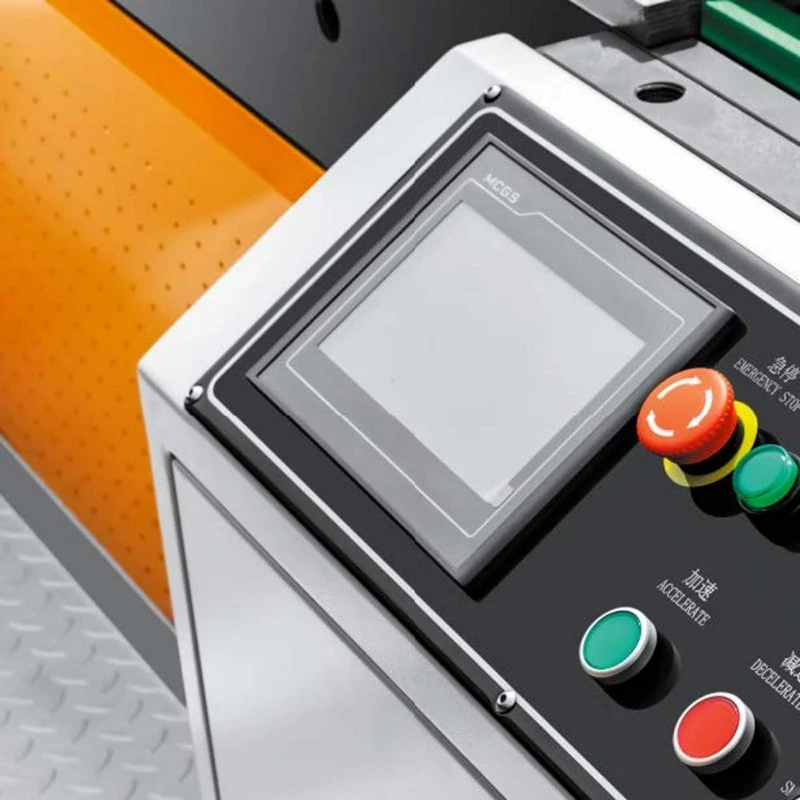
If you’re running a slitter rewinder line and you’re dealing with constant scrap messes, downtime, or bad cuts, it’s probably time to upgrade your scrap winder—or maybe your whole high-speed slitter rewinder. I’ve been doing this long enough to tell you that skimping on parts like this will cost you way more in the long run than just investing in a good unit. If you want to chat about your specific setup, what materials you run, or how a high-speed scrap winder can help your bottom line, reach out to us. No sales pitch, just real talk. I’ll even walk you through a test run of a slitter rewinder at our facility if you want to see how it works for yourself.
High Precision Slitting Machine References:
- Slitting and Rewinding: Principles and Practices, Converting Technology Association, 2021.
- High-Speed Web Handling: Tension Control for Precision Processes, Industrial Press, 2022.
- OSHA Safety Standards for Converting Machinery, U.S. Department of Labor, 2023.
- Flexible Packaging Waste Reduction: Scrap Reuse and Recycling Guidelines, Sustainable Packaging Coalition, 2022.
Honghui Machinery Equipment Co., Ltd.
As one of the most professional high-speed slitter rewinder manufacturers in China, we have world-leading production equipment and strong manufacturing capabilities. Please rest assured to buy advanced high-speed slitter rewinder made in China here from our factory. We also accept customized orders.
Address: No.28, Liuheng Road, Changping Town, Dongguan City, Guangdong Province, China
E-mail: info@cnhohui.com
WebSite: https://www.cnhohui.com/
