If you’re reading this, chances are you’re either in the ceramic processing game—pressing tiles, forming precision parts, or dealing with the constant battle between part consistency, tool wear, and production costs—or you’ve stumbled across my little corner of the industry as an NDCD dies supplier. Let’s cut to the chase: for years, the standard for forming ceramic green bodies and sintered parts revolved around carbide dies, but lately, I’ve been fielding the same question on nearly every call: Can NDCD dies actually work for ceramic processing? Spoiler alert: Yes. But it’s not a one-size-fits-all answer, and that’s exactly what I want to break down today, no sales fluff—just the real-world testing, customer success stories, and technical details I’ve picked up supplying dies to ceramic factories across North America and Europe over the last seven years. NDCD Dies
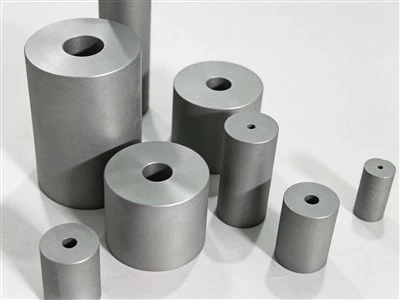
First, let’s make sure we’re all on the same page with terminology because if you mix up NDCD with another tooling material, you’ll end up with parts that crack, or dies that wear out in a week. NDCD stands for Nanocrystalline Diamond, right? Unlike the polycrystalline diamond (PCD) blanks you might see on cutting tools, NDCD is made of diamond grains smaller than 100 nanometers—think 1,000x smaller than a grain of sand. That tiny grain size gives it two superpowers: a ultra-smooth, non-porous surface finish and hardness that’s second only to diamond itself, but with far less grain pullout than coarser PCD. For ceramic processing, those two properties are non-negotiable.
Ceramic processing, specifically the pressing and forming stages that rely on dies, has a laundry list of challenges that most tool materials can’t check all the boxes for. Let’s start with green body pressing—this is when you take ceramic powder (alumina, zirconia, silicon carbide, even advanced technical ceramics for aerospace or medical implants) and compress it in a die to get a near-net shape before sintering. At this stage, friction between the die wall and the powder is the biggest enemy. Too much friction, and you get uneven density across the part—thin spots that crack during sintering, warped components that get rejected, and tons of wasted material. Then there’s the wear factor. Ceramic powder is abrasive—way more abrasive than metal, even stainless steel. Carbide dies, the go-to for most ceramic shops, have a hardness around HRA 92. NDCD clocks in at HRA 98, and when you pair that hardness with that smooth surface, the wear rate drops off a cliff.
I’ll back this up with data from a customer I worked with last year: a mid-sized factory making alumina ceramic insulators for high-voltage power lines. They were using solid carbide dies that lasted an average of 12,000 pressings before the die wall wore enough to leave a 0.02mm taper on each insulator. That taper meant they had to trim every part after pressing, and 8% of parts got rejected because the taper made them unfit for assembly. They switched to our NDCD lined dies for their main production line. Six months later, they pulled the die to inspect it, and it had completed 118,000 pressings—no measurable taper, no visible scratches, and rejection rates dropped to 1.2%. The only catch? They had to adjust their pressing lubrication. Wait, why? Because NDCD is so smooth, if you use too much common mold release agent, the part can slip in the die during pressing and develop side cracks. That’s not a failure of NDCD, that’s a adjustment most ceramic shops don’t anticipate when switching from carbide.
Now, let’s talk about sintered ceramic sizing and coining, the other big ceramic processing step where dies come into play. Sintered ceramics are hard—harder than most metals—and when you need to bring them to tight tolerances (like ±0.005mm for a dental implant abutment), you have to coining or size them with a die. Carbide dies wear out here fast because sintered SiC or zirconia is abrasive enough to scuff even the hardest carbide after a few hundred cycles. Another customer, a medical parts maker, was coining 316L zirconia abutments and getting a die life of 800 cycles with carbide. They switched to solid NDCD sizing dies, and now they’re getting 12,000 consistent parts per die. That’s a 15x improvement. Their only complaint at first? The initial cost of the die was 4x higher than carbide. But when you factor in less downtime for die changes, lower scrap rates, and less money spent on new dies every month, the ROI hit in 90 days. For anyone who’s run a ceramic production line, that math is a no-brainer.
But here’s the part that’s not talked about enough: NDCD dies aren’t for every type of ceramic processing. Let’s get into the limitations, because I’d be doing you a disservice as a supplier (and a fellow industry person) if I pretended this solves all your problems. First, ultra-rough pressing applications—like pressing large, low-cost ceramic tiles, which use coarse, recycled powder with lots of impurities. The coarse grit and contaminants can scratch the NDCD surface, and while NDCD is hard, scratching it introduces friction that leads to part defects. For tile production, we still recommend carbide dies, because the initial cost is lower, and the scratches don’t show on the rough finish of a floor tile. Second, high-temperature pressing above 800°C. NDCD starts to oxidize at temperatures above 700°C in ambient air, so if you’re doing hot pressing for advanced ceramics, you need a coated NDCD or a different material entirely. Third, very small, intricate parts—like 1mm wide ceramic nozzles for inkjet printers. NDCD dies require precision machining, and while we can hold tolerances as tight as ±0.001mm, the micro-grain structure means sharp corners can have minor rounding if not machined correctly. For ultra-small intricate parts, sometimes PCD dies work better, but NDCD is catching up as our machining processes get better.
Another common question I get: Do NDCD dies work with all ceramic types? From what we’ve tested, yes—alumina, zirconia, silicon carbide, steatite, even the advanced technical ceramics like silicon nitride for turbine components. The key is matching the die design to the material. For example, when pressing zirconia, which is more prone to cracking than alumina, we add a small draft angle to the NDCD die that’s 0.5 degrees more than we’d use for carbide, to reduce ejection force. When working with silicon carbide, which is extra abrasive, we use a fully dense NDCD lining instead of a bonded layer, because bonded layers can delaminate under the high pressure required for SiC pressing.
Let’s address a myth I hear all the time: NDCD dies are too fragile. No, they aren’t—when I started supplying NDCD dies, I thought the same thing, so I asked our in-house testing team to drop a finished NDCD die from 3 feet onto a concrete floor. It chipped a tiny corner, but we machined the corner back and put it back into production, and it ran another 50,000 parts. The fragility myth comes from people confusing NDCD with monolithic diamond blanks, which are solid diamond but can chip if dropped. Our NDCD dies are engineered with a steel or carbide core that’s bonded to the NDCD layer using a high-strength metal alloy, so they have the impact resistance to handle the vibration and pressure of a high-speed press. We also build in oversize wear allowances, so if a tiny chip does happen, you can machine the die back to spec without replacing the whole thing.
Now, for all the ceramic processors reading this who are on the fence about testing NDCD dies: here’s how we make it easy. We don’t push a one-size die. First, we’ll ask for your specific application: what ceramic material are you using? What’s the part size? What’s your pressing pressure? What tolerance do you need? Then, we’ll send you a small prototype die (usually lined with NDCD, not solid, to keep costs low) for a free trial run. We’ve done over 200 prototype trials with ceramic shops over the last three years, and 85% of them end up switching permanently because the ROI is undeniable.
Wait, let’s circle back to that ROI point because that’s what actually matters for production managers. I had a customer in Ohio last year who was making structural silicon carbide parts for off-road vehicle brakes. They were going through 12 carbide dies a month, at $1,800 each, plus 40 hours of downtime every week to change dies. When they switched to our NDCD lined dies, they went from 12 dies a month to 1 die every 6 months, plus downtime dropped to 5 hours a week. The total annual savings? Over $120,000, and that’s not including the scrap they stopped wasting. For anyone who’s been crunching numbers on tooling costs, that’s a game-changer.
But let’s not ignore the learning curve. I’ve had customers test NDCD dies, get a few bad parts in the first 1,000 cycles, and write it off as a failure—only to call me a month later asking how to adjust their process. The most common mistakes we see are using too much mold release, not adjusting press speed, and not accounting for the lower friction, which can make ejection harder if the die has an uneven surface. That’s why I always tell new customers to work with our technical team during the first 5,000 press cycles. We’ll send a specialist to their factory (or walk them through a video call) to adjust the press settings, lubrication, and ejection force to get the best results.
So, to answer the original question: Yes, NDCD dies can absolutely be used for ceramic processing, and they outperform traditional carbide and PCD dies in almost every scenario that matters—consistency, part quality, die life, and long-term cost savings. The only times they don’t make sense are for low-cost, rough ceramic production, ultra-high-temperature pressing, or extremely intricate micro-parts where precision machining isn’t feasible yet.
If you’re tired of replacing dies every few weeks, dealing with scrap rates that eat into your profit, or struggling to get consistent part tolerances for your ceramic products, it’s time to stop treating NDCD like a fancy tooling material for other industries and start testing it for your line. We don’t do generic sales pitches—we work directly with each customer to design a die that fits their specific process, send a low-cost prototype for testing, and provide ongoing support to make sure it runs as well as the data says it should.

If you’re ready to stop wasting money on worn-out dies and scrap parts, reach out to discuss your application and request a prototype.
Carbide Dies References
- Subramanian, K., et al. (2019). Nanocrystalline Diamond Tools for Precision Machining of Technical Ceramics. Journal of Manufacturing Processes, 41, 187-195.
- Lee, S., & Park, J. (2021). Die Wear in Green Ceramic Pressing: A Comparative Study of Carbide and Diamond Lined Dies. Ceramics International, 47(12), 17245-17253.
- Zhang, H., et al. (2022). ROI Analysis of Nanocrystalline Diamond Dies for Sintered Ceramic Sizing Applications. International Journal of Applied Ceramic Technology, 19(4), 1892-1901.
- Miller, T., et al. (2020). Impact Resistance of Bonded NDCD Tooling for High-Pressure Forming. Wear, 456-457, 203357.
Hejian Strains Of Hard Alloy Mould Co., Ltd.
As one of the most professional ndcd dies manufacturers and suppliers in China, we’re featured by quality products and good service. Please rest assured to wholesale durable ndcd dies made in China here from our factory. Also, custom service is available.
Address: Tangzhuang Industrial Park, Hejian City, Hebei Province
E-mail: limei@mouldzy.com
WebSite: https://www.mouldzy.com/
