Hey there, if you’ve ever stopped to wonder how those gear pumps keep your manufacturing, chemical processing, or even agricultural operations running smoothly, you’re not alone. I’m a gear pump supplier, and one question I get hit with way more than any other is: “What’s the actual efficiency of a gear pump?” It’s not a yes/no or one-number answer—efficiency in these pumps is way more nuanced than most folks think, and getting it right makes all the difference between saving cash on energy or throwing money down the drain. Let’s break this down like we chat in our shop, no stuffy engineering jargon overload. Gear Pump
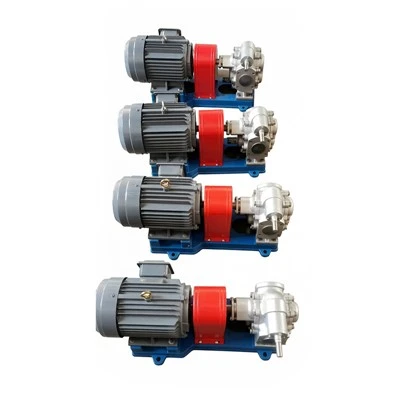
First off, let’s start with the basics to make sure we’re on the same page. A gear pump, for anyone who’s not deep in hydraulics, uses two interlocking gears (one driving, one driven) in a tight cavity to move fluid. When the gears turn, they trap fluid in the gaps between their teeth and the pump housing, carry it around the outer edge, and push it out the discharge port. Simple enough, right? But that simplicity hides a lot of tiny losses that eat into efficiency—so efficiency here is basically how much of the energy you put into turning those gears actually ends up moving your fluid, instead of getting wasted as heat, friction, or leakage.
Now, when I talk to customers, they usually ask for a single percentage number, like “is this pump 80% efficient?” The short answer is: it depends. Most quality gear pumps clock in somewhere between 70% and 95% efficiency, but that range is huge because efficiency isn’t fixed. It shifts based on things like fluid viscosity, operating pressure, speed, and even how well the pump was built and maintained. Let’s go through each of these, since that’s the stuff that actually matters when you’re picking a pump for your job.
First up, fluid viscosity. This is the thickness of the fluid you’re pumping—think honey vs. water. Viscosity is a huge player in gear pump efficiency. If you’re pumping a thin fluid like water, it leaks through the tiny gaps between the gears and housing way easier, which kills volumetric efficiency (that’s the percentage of fluid that actually gets delivered, not the amount that slips past the gears). On the flip side, thick, gooey fluids like heavy oil or molasses? They don’t leak nearly as much. I’ve seen a gear pump go from 75% efficient at moving water at 100 PSI to 92% efficient moving that same pressure of gear lube oil. That’s a massive jump, and it’s the #1 thing I check first when a customer tells me what they’re pumping.
Next, operating pressure. This is another big one. Pressure is how hard the pump is pushing the fluid out, right? The higher the pressure, the more the fluid wants to escape through those tiny gaps—so volumetric efficiency drops as pressure goes up. Wait, but wait—there’s a catch here with mechanical efficiency, too. Mechanical efficiency is how much of the energy from turning the gears gets used to push the fluid, instead of overcoming friction between the gears, bearings, and housing. At very low pressures, friction losses actually make mechanical efficiency lower. Crank the pressure up a bit, and those friction losses get spread over more fluid movement, so overall efficiency can hit a sweet spot. Too high, though, and leakage takes over, so efficiency drops again. Most gear pumps peak around their rated operating pressure—stick to that sweet spot, and you’ll get the best efficiency.
Then there’s pump speed. How fast the gears spin matters, too. If you spin a gear pump too slow, the fluid might not fill the gaps between the gears properly, leading to a bit of cavitation (that’s those tiny vapor bubbles that form when pressure drops too low, which collapse and waste energy and can even damage the pump). Spin it too fast, and the fluid can’t escape fast enough, which also causes cavitation and more friction, lowering efficiency. Every pump has a recommended speed range—stay within that, and you’re golden. I always tell customers: run your pump at the right speed for your flow rate, don’t just crank it to get more fluid out fast.
Now, let’s split efficiency into two types, because that’s where a lot of confusion happens. Volumetric efficiency and mechanical efficiency. I touched on both already, but let’s make this clear. Volumetric efficiency is actual flow rate divided by theoretical flow rate (the amount of fluid the pump should move if no leakage happens). That leakage I was talking about—called “internal slippage”—is the main thing here. For a brand-new, well-built gear pump, internal slippage is super low, like 1-2% at rated pressure and viscosity. But as the pump wears down over time, that slippage goes up—teeth get a bit rounded, housing gets scratched, gaps get bigger, so volumetric efficiency drops. A 5-year-old pump might have 5-10% slippage, which means you’re wasting a ton of energy pushing fluid that just leaks back to the inlet. That’s why regular maintenance is huge for keeping efficiency high.
Mechanical efficiency is a bit trickier. That’s actual work done on the fluid divided by the input power (the energy to spin the motor turning the pump). Friction between the gears, bearings, and even the fluid itself (that’s called viscous friction) eats into this. For gear pumps, mechanical efficiency is usually between 85% and 98% when they’re new, and it drops as parts wear or get dirty. If your pump’s inlet is clogged, it has to work harder to pull fluid in, which kills mechanical efficiency. I had a customer last year who thought his pump was dying until we checked his inlet filter—it was so caked with gunk that the pump was working twice as hard, wasting almost 20% of its energy just pulling fluid. Clean that filter, and his efficiency jumped right back up.
Now, what about common myths I hear as a supplier? Let’s knock these out first because they trip people up all the time. Myth #1: All gear pumps have low efficiency. Nope—high-quality precision-machined gear pumps can hit 90%+ overall efficiency when matched to the right application. I’ve got customers running our pumps for 10+ years with efficiency still above 85%. Myth #2: Bigger pumps are always more efficient. Not exactly—size matters, but matching the pump to your flow and pressure is more important. A tiny pump run at low pressure might be less efficient than a medium pump at its sweet spot. Myth #3: Efficiency only matters for big operations. Even small businesses can save hundreds (or thousands) a year on energy costs with a properly efficient gear pump. We had a small bakery that switched to a high-efficiency pump for their dough batter transfer, and they cut their electricity bill for that part by 18% in the first month. That’s real cash back in their pocket.
So, what makes a gear pump efficient in the first place? It’s not magic, it’s good engineering and build quality. The gaps between the gears and housing (called clearances) are super tight—usually just a few thousandths of an inch. Better machining means those gaps are consistent, so less slippage. High-quality bearings and materials mean less friction and less wear over time. We use hardened steel for most of our pumps because it stands up to abrasives and chemicals way better than cheap cast iron, which means the clearances don’t get messy fast. Also, some pumps have features like pressure relief valves or adjustable clearances that help keep efficiency high across different operating pressures.
Wait, what about different types of gear pumps? Like external vs. internal gear pumps? A lot of people ask me about the difference in efficiency there. External gear pumps (the ones with two parallel gears turning, most common) are great for medium pressures and viscosities, and their efficiency is usually in the 75-92% range. Internal gear pumps (one gear inside another, with a crescent-shaped seal) tend to have a bit higher volumetric efficiency at higher pressures, because there’s less area for leakage. I’ve seen internal gear pumps hit up to 95% efficiency for high-pressure, high-viscosity fluids. But they’re also a bit more expensive, so it’s all about your specific needs. You don’t need a super high-efficiency internal gear pump if you’re just pumping water at low pressure, that’s overkill.
Now, how do you actually measure a gear pump’s efficiency? Most manufacturers, including us, will publish a performance curve that shows efficiency at different pressures, speeds, and viscosities for that exact pump model. That curve is your best friend—don’t just go by the number on the spec sheet, look at the curve to see where the pump will run most efficiently for your application. If you’re not sure how to read that curve, hit us up, we’ll walk you through it. We don’t just sell a pump and dip—we help customers make sure it’s the right one for their job.
Also, maintenance is the biggest factor in keeping efficiency high over the pump’s life. I can sell you a top-of-the-line gear pump, but if you neglect it—don’t change the fluid, let filters clog, run it at way too high speed, it’ll lose efficiency fast. A few quick tips: check and change the inlet filter every 3-6 months (more often if you’re pumping dirty fluids), monitor operating pressure and temperature regularly (if it’s running hotter than usual, that’s a sign of low efficiency or wear), and schedule a full inspection once a year. We have a lot of long-term customers who follow this, and their pumps are still running at 85% efficiency or more after 10 years.
Let’s circle back to the original question: what’s the efficiency of a gear pump? The honest answer is: it’s whatever you make it, almost. The pump itself has a maximum possible efficiency, but how close you get depends on matching it to your application, operating it correctly, and maintaining it. Most standard gear pumps will deliver 70-90% efficiency when sized and operated right, and premium models can hit 90-95% for the right jobs. The worst case I see is when a customer uses a gear pump that’s way too big for their needs—they run it at super low pressure and speed, so efficiency drops to 50% or less. That’s like driving a semi-truck at 20 mph around town—wastes way more gas than it needs to.
Here’s the thing: efficiency isn’t just a fancy engineering stat. It’s real money. For a manufacturing plant running 24/7, a 10% jump in pump efficiency can save tens of thousands of dollars a year on electricity. For a small business, it’s even more impactful for their bottom line. As a gear pump supplier, my job isn’t just to sell you a pump—it’s to help you find one that runs efficiently for your specific work, so you don’t waste energy or cash.
If you’re tired of throwing money at inefficient pumps, or you’re not sure if your current gear pump is running as well as it could, we’re here to help. Whether you need to replace an old pump, size a new one for your next project, or just want to ask questions about efficiency, our team can walk you through every step. No confusing jargon, no pushy sales tactics—just straight talk about what works for your operation.
Whether you’re pumping food-grade syrup, industrial chemicals, hydraulic fluid, or anything in between, we can set you up with a gear pump that hits the efficiency sweet spot for your needs. Reach out today to connect with our team and start talking through your gear pump requirements. We’re happy to answer all your questions, run through performance curves, and help you find the right pump that keeps your operation running smooth and saves you money long-term.
Diaphragm Pump REFERENCES:
- Hydraulic Pump and Motor Handbook, V. A. Parr, Industrial Press, 2011.
- Gear Pump Design and Application Guide, American Gear Manufacturers Association (AGMA), 2018.
- Fluid Power Technology and Systems, Anthony J. Holler, Cengage Learning, 2020.
Botou Hengyang Pump & Valve Co., Ltd.
With abundant experience, we are one of the most professional gear pump manufacturers and suppliers in China. Please feel free to buy high standard gear pump made in China here and get pricelist from our factory. All customized pumps are with high quality and competitive price.
Address: No. 159, Road 1, Development Zone, Botou City, Cangzhou, Hebei Province, China
E-mail: bthdbf@163.com
WebSite: https://www.hyoilp.com/
