If you’ve ever worked in packaging, labeling, or flexible packaging production, you’ve probably wondered: “How long does cast polypropylene (CPP) film actually last on a shelf before it stops working right?” As a CPP film supplier who’s talked to hundreds of brands, small-packaging shops, and industrial users, I can tell you this isn’t a one-size-fits-all answer. A lot of factors you might not think about—storage conditions, how the film’s wrapped, even its intended use—play a huge role. And knowing the real storage life isn’t just trivial; it keeps you from wasting money on expired film that’ll ruin your production run or your end product. Cast Polypropylene Film
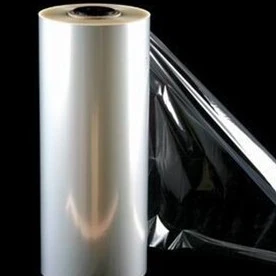
First, let’s cut through the noise: CPP film’s storage life isn’t set in a number like “24 months” without context. That said, under ideal conditions, good-quality, unopened CPP film will last 2 to 3 years. But that’s the best-case scenario. Mess up the storage (say, leave it in a damp warehouse or in direct sunlight), and that timeline can shrink to just a few months. I’ve seen this first-hand: last year, a small snack packaging company ordered a bulk roll of plain CPP, stored it in a leaky corner of their loading dock over a rainy winter, and by the time they opened it 8 months later, the film was brittle and developed tiny tears. They had to scrap the whole batch—cost them thousands in production delays. That’s the sort of avoidable mistake that makes knowing the real storage matters.
Let’s break down what actually affects CPP’s shelf life, because that’s where people get confused. The biggest culprits are moisture, temperature, UV exposure, and physical stress. CPP is a polyolefin, a type of plastic that’s pretty durable, but it’s not invincible. Moisture is the #1 enemy here. CPP film is hydrophobic, meaning it repels water, but if it’s stored in a humid space, especially if the packaging (usually polyethylene or polypropylene bags) gets torn, moisture can seep in. That causes the film to hydrolyze over time—basically, the polymer chains break down, making it stretchy instead of rigid, or brittle instead of flexible. For food packaging, this isn’t just a performance issue; if the film becomes porous because of hydrolysis, it can let in moisture or oxygen, which ruins the food inside. I’ve had clients tell me their potato chip bags had stale chips because their CPP film was too porous, and when we tested it, it had been stored in a 75% humidity warehouse without climate control for 18 months.
Next up: temperature. Extreme heat or cold messes with CPP’s molecular structure. If you store it in a place where temperatures swing wildly—like a warehouse with no AC that hits 100°F (38°C) in the summer or 30°F (-1°C) in the winter—you’re speeding up degradation. Heat makes the polymer chains relax, which can cause the film to shrink slightly over time. That might not sound like a big deal, but if you’re printing graphics or laminating it to another material for a packaging line, even a 1% shrinkage can throw off your registration marks and ruin your rolls. Cold, on the other hand, makes CPP rigid. If you pull a roll out of a cold storage area and try to run it through a laminator without warming it up, it’ll crack. The sweet spot for storage temperature is between 50°F (10°C) and 77°F (25°C), with stable humidity under 65%. That’s the sweet spot we always recommend to clients.
Then there’s UV exposure. Direct sunlight or even bright indoor fluorescent lights emit UV rays that break down CPP’s polymer chains. This is a big one for film that’s stored in a warehouse with big windows, or even in a truck bed during delivery if it’s unprotected. UV degradation makes the film turn cloudy, lose its gloss, and become brittle. I remember a client who left a stack of unopened CPP rolls outside their loading dock for 6 weeks while waiting for a new loading door. When they brought them inside, the film was so brittle that it crumbled when they tried to unroll it. Total waste. For most general-purpose CPP (like food packaging or labels), that’s a death sentence. If you need CPP that’s going to be exposed to light later (like for outdoor packaging), you can get UV-stabilized grades, but even those have limits. Standard CPP? Stick to dark, covered storage.
Physical stress and handling also matter. How you store the rolls is just as important as the environment. If you stack heavy rolls on top of lighter ones, the bottom rolls can get compressed. Over time, that compression causes permanent deformation—they won’t unroll evenly, and the film will have creases that make it impossible to use for printing or lamination. Also, don’t drag rolls across concrete or stack them on wet floors. Even a small tear in the outer packaging can let moisture or dust in, so make sure you store rolls on pallets, not directly on the floor, and leave some space between the rolls and the walls for air circulation.
Now, let’s talk about different types of CPP film, because storage life can vary depending on what it’s made for. Standard uncoated CPP is the most common, used for flexible packaging, labels, and lamination. That’s the one we talked about earlier—2-3 years ideal, less in bad conditions. Then there’s coated CPP, like heat-sealable CPP (often called CPP-HS) or print-coated CPP. These have a thin layer of another material (like acrylic or polyethylene) for heat sealing or better print adhesion. That coating is more sensitive, so the storage life is a little shorter—usually 18 to 24 months. The coating can degrade if exposed to too much moisture or heat, which makes it not seal properly or not take ink right. We always tell clients with coated CPP to use it within 2 years max, even if stored perfectly.
Specialty CPP is even more specific. For example, metalized CPP is coated with a thin layer of aluminum for barrier properties (keeping oxygen and moisture out). The metal layer can peel if stored in high humidity, so its storage life is a bit shorter too—around 18 to 24 months. Then there’s high-temperature CPP, used for packaging that goes through retort sterilization (like canned goods or ready-to-eat meals). That’s formulated to handle heat, but it’s still a polyolefin, so extreme storage conditions can still mess it up—so keep it in ideal conditions, and it’ll last about 2 years.
Another thing people ask: does the expiration date on the packaging matter? A lot of brands print a “best before” date on the outer bag, and that’s a good guideline, but it’s not a hard rule. That date is usually based on our testing under ideal storage conditions. If you store your film in perfect conditions, you can probably use it a few months past that date, but if it’s stored poorly, you might need to use it before that. Always check the film’s performance before you run a big job—do a quick test: unroll a small section, check for brittleness, test heat seal strength, or see if it takes ink evenly. A 10-minute test can save you from ruining a whole production run.
What about if you have film that’s already opened? Once you break the outer packaging, the storage life drops. Now it’s exposed to the environment, so you should use it within 6 to 12 months. Keep it sealed in a plastic bag with a desiccant (those little moisture-absorbing packets) if you can, to keep moisture out. I’ve had a client who had a partial roll of print-coated CPP that they kept in a closed cabinet with a desiccant, and it was still good 10 months later. If you don’t have a desiccant, just make sure to close the bag tightly and store it in a cool, dry place.
Now, let’s get into how to maximize your CPP film’s storage life, because that’s what you actually need to know to save money. First, get it delivered as close to when you need it as possible. Bulk purchases are cheaper, but if you don’t use it for 2 years, you might end up paying for film that’s expired. If you do buy in bulk, stock it properly: store on pallets in a climate-controlled, dark warehouse, with temperature between 50-77°F, humidity under 65%, away from direct sunlight and heat sources (like heaters or industrial ovens). Don’t stack rolls higher than 5 or 6, because the weight will crush the bottom ones. Label each roll with the date it was received, so you can use the oldest first—FIFO (first in, first out) is key here.
Also, when handling rolls, don’t drop them or drag them. Unroll them carefully when you need to use them, and if you’re storing a partial roll, roll it back up loosely (not tight, because tight rolling can cause creases) and seal the end. For coated or metalized CPP, extra care: don’t touch the coated side with your hands, because oils from your skin can cause degradation. If you do get a finger print on it, wipe it with a clean, dry cloth, but even so, oils can speed up breakdown, so better to avoid it.
I’ve seen so many clients waste money on expired CPP film, and it’s avoidable. Just last month, a packaging manager told me they had 5 rolls of CPP that were 18 months old, stored in a damp warehouse, and they tried to use them—3 of them developed holes during printing, so they had to stop production and order new rolls, which cost them $2,000 in rush fees. If they’d stored them properly and checked the performance before running the job, that wouldn’t have happened.
Wait, one more thing: a common misconception is that CPP film is the same as other polypropylene films, like biaxially oriented polypropylene (BOPP). BOPP is stretched, so it’s thinner and has different properties, so its storage life is a bit different. But we’re talking about CPP here, which is cast (not stretched), so it’s thicker, more rigid, and has a longer storage life than BOPP. That’s a key distinction—don’t mix them up.
So, to wrap this up: the storage life of cast polypropylene film isn’t a fixed number, but with proper storage, good-quality, unopened CPP can last 2 to 3 years. Coated or specialty CPP is a bit shorter, 18 to 24 months. Opened rolls are 6 to 12 months. The big rules are: keep it cool, dry, dark, avoid UV and moisture, handle rolls carefully, and use FIFO. If you’re unsure about a roll you already have, do a quick performance test before using it—nothing’s worse than a ruined production run because of expired film.
If you’re a brand, packaging shop, or manufacturer looking for consistent CPP film that’s formulated for long storage life, or if you have questions about your current stock, reach out to our team. We can help you pick the right grade for your use, and give you tips on storage to make your film last as long as possible. Whether you need plain CPP, heat-sealable, or specialty grades, we’ve got you covered. Don’t let expired film throw off your operations—let’s chat about your needs.
Vacuum-Metalized PE Film References
- Plastic Film & Sheeting Association. (2021). Storage and Handling Guidelines for Polyolefin Films.
- Lee, S., & Park, J. (2019). Degradation Behavior of Cast Polypropylene Films Under Various Environmental Conditions. Journal of Applied Polymer Science.
- Flexible Packaging Association. (2020). Shelf Life Best Practices for Flexible Packaging Materials.
- International Organization for Standardization. (2018). ISO 1133:2018 – Plastics – Determination of the melt mass-flow rate (MFR) and melt volume-flow rate (MVR) of thermoplastics (relevant to polyolefin film stability).
Qingzhou Huiyuan Packaging Materials Co., Ltd.
As one of the most professional cast polypropylene film suppliers in China since 1997, we’re featured by quality products and good service. Please feel free to buy cheap cast polypropylene film made in China here from our factory. For price consultation, contact us.
Address: Naoshan Industrial Park, Shaozhuang Town, Qingzhou City, Weifang, Shandong Province, China.
E-mail: 15864598133@163.com
WebSite: https://www.huiyuanfilms.com/
