If you’ve ever stood in a substation on a sweltering summer day, watching transformers hum with the kind of quiet, unyielding power that keeps cities running, you know these pieces of infrastructure aren’t just metal boxes filled with oil. They’re lifelines—expensive, complex, and critical to every facet of modern life. But here’s a truth many asset operators don’t talk about enough: even the most well-built transformer can fail if the insulating oil inside it isn’t working as it should. That’s where oil BDV testing comes in, and as a supplier of oil BDV testers, I’ve spent years walking plant managers through why this simple, routine test isn’t just a “nice to have”—it’s a non-negotiable for keeping equipment online and avoiding catastrophic failures. Oil BDV Tester

Let’s start with the basics: what is BDV, anyway? BDV stands for Breakdown Voltage, and when we talk about insulating oil for oil-filled equipment (transformers, circuit breakers, bushings, voltage regulators), this is the measure of how well the oil can withstand electrical stress before it ionizes and starts conducting current. In plain terms, good insulating oil acts like a barrier—keeping high-voltage electricity trapped where it belongs, not arcing through the equipment and causing a short. If the oil’s BDV drops too low, that barrier breaks down, and you’re looking at everything from unplanned downtime to fires, explosions, or even the total loss of a transformer that can cost tens of thousands, if not millions, of dollars to replace.
I remember a call I got three years ago from a small utility in the Midwest. Their 15-year-old substation transformer had been acting up for months—they’d noticed small, unexplained power blips, and their maintenance team had done all the usual checks: temperature readings, visual inspections for leaks, even a quick oil filter service. They’d never run a BDV test, though. When they finally did, the result was a shock: the oil’s BDV was 18 kV, when the minimum standard for their equipment was 30 kV. Digging into the sample, they found tiny traces of water and particulate matter from slow, unnoticed leaks in the transformer’s cooler. If they’d waited another six months, that low BDV would’ve led to a dielectric breakdown, taking the substation offline during peak summer demand—just as families were cranking air conditioners, leading to rolling blackouts for thousands of customers. That call is one of the reasons I push so hard for BDV testing: it catches problems before they turn into crises.
So why does BDV matter so much, specifically for oil-filled equipment? Let’s break down the real risks of ignoring this test. First, oil’s insulating properties degrade over time, and two of the biggest culprits are water contamination and particulate matter. Water is a silent killer here. Even tiny amounts—just 20 parts per million (ppm) of water in oil can lower BDV by 50% or more, because water molecules ionize far more easily than hydrocarbon molecules in the oil. Over time, transformers breathe (it’s called thermal breathing: as the oil heats and cools, air moves in and out of the tank, pulling moisture from the atmosphere inside). That moisture doesn’t just sit there—it mixes with the oil, creating a conductive pathway that can cause an arc. Particulates, too: tiny bits of copper from winding wear, dirt from faulty gaskets, or carbon from arcing events all act as stress points, weakening the oil’s dielectric strength and bringing down BDV.
Another big risk is internal arcing or partial discharge. Small, seemingly insignificant arcs inside a transformer generate byproducts: sludge, acid, and even water. These contaminants build up over time, so even if the initial oil was perfectly good, repeated partial discharges will gradually lower BDV. If you’re not testing, you can’t catch this degradation until it’s too late. I’ve seen transformers with BDV levels just above the minimum that failed within weeks, because the slow buildup of contaminants wasn’t detected. Routine BDV testing turns this gradual, invisible problem into a measurable number you can track.
Now, how often should you run BDV tests? That’s a question I get all the time, and the answer depends on the equipment’s age, operating environment, and maintenance history. For new equipment, it’s standard to test before commissioning—you don’t want to install oil that might have been contaminated during factory packaging or transport. For in-service equipment, most industry standards (like IEC 60156, ASTM D1816, and IEEE 677) recommend annual testing for transformers over 10 years old, and every two to three years for newer equipment, unless you’re operating in a harsh environment: coastal areas with high humidity, industrial sites with dust or chemical fumes, or substations that see frequent load fluctuations. Even if you’re filtering your oil regularly, BDV testing is still necessary—filters remove large contaminants, but they can’t catch dissolved moisture or fine particulate, which are the main drivers of low BDV.
A common misconception I hear is: “We test the oil’s dielectric strength once a year, and that’s enough.” Wait—no, actually, BDV testing is a specific measure of dielectric breakdown under AC voltage, which is exactly the voltage your transformer uses during operation. Other tests, like measuring interfacial tension or total acid number, tell you about oil aging, but they don’t directly measure how well the oil will perform when under electrical stress. BDV fills that gap. It’s a direct, quick, and affordable way to verify that your oil is doing its job.
I also want to address a question many operators have: is BDV testing accurate, and can small variations in test conditions skew results? The short answer is yes, if you follow standard procedures. That’s why a reliable oil BDV tester isn’t just a device that applies voltage between two electrodes in a sample cup— it’s built to adhere to strict standards. For example, IEC 60156 specifies that electrodes must be 2.5 mm apart, the oil sample must be conditioned to 25°C, and the voltage must rise at a rate of 2 kV per second until breakdown occurs. A good tester will automate these steps, eliminating human error that can come from manual voltage adjustment or improper sample handling. It will also have consistent electrode design and calibration, so your results are comparable from test to test, year over year. If you’re using a tester that cuts corners, you might get a false high reading that makes you complacent, or a false low reading that leads you to do unnecessary oil changes—wasting time and money.
Let’s talk about the cost of not testing, too. A new distribution transformer can cost $50,000 to $150,000, and a large power transformer can run into the millions. The downtime from a failure? For a commercial substation, unplanned outages can cost $100,000 per day or more in lost revenue, not to mention fines for regulated utilities or damage to customer equipment. Compare that to the cost of oil BDV testing: a single test with a portable BDV tester is a few hundred dollars, and even annual testing for an entire fleet of transformers works out to a fraction of the cost of a single failure. It’s a small investment for massive protection.
I’ve also worked with operators who use BDV testing as part of a predictive maintenance program, not just a reactive check. By tracking BDV levels over time, you can spot trends before a failure is imminent. For example, if one transformer’s BDV drops 2 kV in six months, while all others in the same fleet are stable, that’s a red flag for a slow leak or a faulty gasket. If multiple transformers in a coastal facility are seeing BDV drops during the rainy season, you can adjust your maintenance schedule to add more drying or filtering during those months. It turns routine testing into a tool for proactive management, not just a box to check.
Now, you might be wondering: what about other testing methods, like dissolved gas analysis (DGA)? DGA is incredibly useful for detecting internal faults like arcing or overheating, but it doesn’t replace BDV. DGA tells you why a problem is happening, while BDV tells you if a problem exists right now. The best maintenance programs use both: run BDV on a regular basis to verify oil performance, and run DGA periodically to dig into the root cause if BDV drops. It’s a complementary pair, not a replacement.
I’ve seen too many operators cut corners on BDV testing over the years, convinced that their equipment has “always worked” or that their other tests are enough. But the Midwest utility I mentioned earlier? They never thought a small, unnoticed leak would lead to a near-catastrophic failure. Now, they run BDV tests quarterly, and they’ve caught two separate small leaks before they could cause harm. That’s the value of this test: it’s simple, it’s affordable, and it’s one of the most effective ways to protect your most critical equipment.
If you’re still running oil-filled equipment and skipping BDV testing, I want to be clear: this isn’t a test you can afford to ignore. It’s a guardrail for your assets, your customers, and your bottom line. Whether you’re managing a single distribution transformer or a fleet of high-voltage power transformers, the right oil BDV tester will give you accurate, reliable results that let you make informed maintenance decisions, avoid unplanned downtime, and extend the life of your equipment.
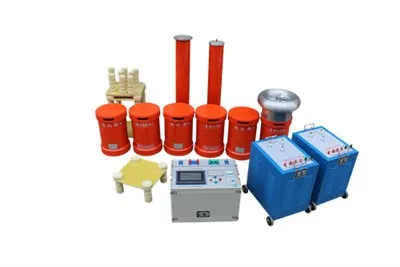
To learn more about how our oil BDV testers can fit into your maintenance program and help you implement regular, accurate testing, reach out to our team to schedule a consultation. We’ll walk you through test protocols, answer questions about standard compliance, and help you find the right solution for your specific equipment and operation.
Impulse Voltage Generator References
- International Electrotechnical Commission (IEC) 60156: Insulating liquids – Determination of the breakdown voltage at power frequency
- American Society for Testing and Materials (ASTM) D1816: Standard Test Method for Dielectric Breakdown Voltage of Insulating Oils of Petroleum Origin Using VDE Electrodes
- Institute of Electrical and Electronics Engineers (IEEE) 677: Guide for Dielectric Tests in the Field on Power Transformers
- CIGRE Working Group A2.37: Maintenance of Transformers – Guide to Diagnostic Methods and Management of Condition Data
Wuhan Goldhome Hipot Electrical Co., Ltd.
Wuhan Goldhome Hipot Electrical Co., Ltd. is one of the most professional oil bdv tester manufacturers and suppliers in China, featured by quality products and good price. Welcome to buy oil bdv tester in stock here and get pricelist from our factory. Contact us for customized service.
Address: A25 Huading Industrial Park, Wuhan Economic and Technological Development Zone, Hubei Province
E-mail: sales@goldhomehipot.com
WebSite: https://www.goldhomehipot.com/
