Hey there, fellow lab folks! Let’s cut to the chase—if you’ve ever stared at a vial of lyophilized peptide and thought, “Wait, how do I turn this into something that works for Western blot without messing it up?” you’re not alone. As someone who’s spent the last few years shipping these little freeze-dried powerhouses to labs all over, I’ve seen so many good (and not-so-good) attempts at prepping them for WB that I wanted to share what actually works. No stuffy protocol sheets here—just real talk, tips I’ve picked up from lab partners, and the mistakes we’ve helped fix time and time again. Lyophilized Peptide
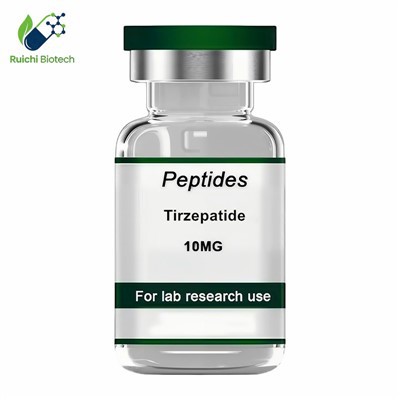
First off, let’s make sure we’re on the same page: lyophilized peptides are basically just amino acid chains that’ve been frozen and then dried under vacuum to turn ’em into that fluffy, easy-to-store powder (or sometimes a solid cake). We do this because peptides are unstable—they degrade, clump, or break down at room temp or in liquid for too long. That’s why when they show up at your bench, they look like a tiny, dry little chunk or powder, not a solution. So prepping ’em wrong? Total waste. Waste of time, waste of peptide, and waste of money—something none of us need when reagents are already tight.
Let’s start with the first step: checking the vial. I know, it sounds basic, but you’d be surprised how many folks skip this. When a peptide’s lyophilized, sometimes a little bit gets stuck to the cap or the inside of the vial neck. That means if you just pop the top and dump whatever’s “in the main part” into water, you’re losing 10-20% of your peptide before you even get started. Pro tip from our team: Give the vial a quick spin (like, 10 seconds at 1000g) before you open it. All that fluffy powder or cake will settle down to the bottom, so when you pierce the cap, nothing spills out onto the bench (saving you from cleaning up a tiny, messy stain) and you get every last bit of peptide. Also, double-check the label—we print the exact amount of peptide (in mgs or µgs) and the recommended storage conditions right there. Most of our folks store unopened vials at -20°C, which keeps ’em fresh for years, but if you opened one a while back and just need a small amount, you can keep it at 4°C for a few weeks—just make sure it’s in a dry place, no humidity.
Next up: reconstitution. This is make-or-break. If you mess this part up, your peptide’ll either clump up like a little rock and not bind to your target, or it’ll degrade before you even add it to your gel. First, pick the right solvent. Peptides are weird—some love water, some hate it. Hydrophilic peptides (the ones with lots of charged amino acids, like lysine or glutamic acid) will dissolve straight in ultrapure water. But hydrophobic peptides (think: alanine, valine, lots of fatty side chains) will just float on top or clump if you add water. For those, we usually suggest a little bit of organic solvent first—like DMSO. Wait, DMSO, not methanol or something else? Yeah, DMSO is the go-to because it’s miscible with most aqueous buffers, and it doesn’t mess up the peptide structure (as long as you don’t use too much). How much DMSO? A general rule is to add 10-20% of your final reconstitution volume. So if you want a 1 mg/mL solution, add, say, 10 µL of DMSO first, then mix with water or your buffer later.
Wait, but what if you don’t want DMSO for your WB? A lot of folks avoid it because it can interfere with some antibody binding, right? So once your peptide is dissolved in DMSO, you can dilute it with your WB buffer—like 1x TBST or PBS—to get rid of the DMSO. Just make sure the total concentration of DMSO is less than 10% in your final working solution. If your peptide is super hydrophobic, you can also add a tiny bit of a weak acid (like 0.1% acetic acid) for basic peptides, or a weak base (like 0.1% ammonium hydroxide) for acidic peptides. That helps break up the hydrophobic interactions between peptide chains so they don’t clump.
Here’s a mistake we see all the time: adding too much solvent at once and vortexing like crazy. Don’t do that. Lyophilized peptides are fragile—vigorous vortexing can cause shear forces that break the peptide chain into smaller fragments, which don’t work for WB (since you need the full-length peptide to bind your antibody). Instead, after adding your first solvent, let the vial sit at room temp for 5-10 minutes. Then gently pipette up and down with a small tip (like a 10 µL or 20 µL tip) to mix. If you still see a little clump, don’t panic—let it sit a bit longer, maybe flick the vial lightly to get the clump off the sides. Most of the time, it’ll dissolve on its own, no need for harsh mixing.
Once your peptide is fully reconstituted, you need to make stock solutions, not just work with whatever’s in the vial. Because if you keep going back and forth to the same vial every time you do a WB, you’re introducing moisture every time you open it, which can make the peptide degrade. Our standard suggestion is to make small aliquots—like 10 µL or 50 µL each—so you only thaw what you need for one experiment. Store the aliquots at -20°C, and once you thaw one, use it within a week or two. If you have a lot left over, don’t refreeze it—just toss it. Refreezing and thawing multiple times breaks down peptides, and you’ll get inconsistent results in your WB.
Now, let’s talk about prepping for the WB specifically. Because once your peptide is reconstituted, you don’t just load it straight into the gel (wait, actually, some folks do for peptide-based WB, like immunizing with it, but let’s cover that too). First, if you’re doing a competition WB—where you add your peptide to your primary antibody to block specific binding—you need to make sure your peptide is at the right concentration. We usually recommend starting with a molar ratio of 10:1 (peptide to antibody). Antibodies are typically around 1 mg/mL, so if your peptide is 1 mg/mL, that means if you’re using 1 µL of antibody, you need 10 µL of peptide. Just adjust based on your antibody’s concentration (check the datasheet for that—most antibody companies list it). Don’t use too little peptide, or it won’t block all the non-specific binding. Too much, and it might interfere with the antibody-target interaction, so testing a 5:1 and 15:1 ratio first is a good idea if you’re new to a specific peptide.
If you’re making a standard curve for quantitative WB (like checking how much of your target protein is present), you’ll need to dilute your peptide stock into your sample buffer. Remember, sample buffer for WB has SDS and beta-mercaptoethanol (or DTT), which denatures proteins. Peptides are small, so they denature really easily— that’s actually fine! Just make sure you don’t heat the sample too hot or for too long. A lot of folks heat their protein samples at 95°C for 5 minutes, but for peptides, heating at 70°C for 2-3 minutes is enough. Heating at 95°C can cause the peptide to stick to the sides of the tube, or even aggregate, so that’s a quick fix. Also, don’t forget to add a loading control—like BSA or a small protein standard—to make sure your loading is consistent.
Wait, what about if your peptide is for generating antibodies? That’s another common use for lyophilized peptides, and prepping them for immunization has a couple of extra steps. You need to conjugate them to a carrier protein (like BSA or KLH) first, right? If you’re buying conjugated peptides from us, just follow the same reconstitution steps—no extra steps needed. If you’re conjugating yourself, make sure the peptide has a free amine or carboxyl group to attach to the carrier. Again, don’t use too harsh solvents here, because you need the peptide’s antigenic epitope (the part that the antibody binds to) to stay intact. A lot of labs use DMSO for conjugation because it keeps the peptide soluble and doesn’t mess up the epitope.
Now, let’s get into the common mistakes we’ve seen, so you can avoid ’em. First: not spinning the vial before opening. We’ve had so many labs call us saying “my peptide is gone when I opened the vial!” and it’s just because a bunch spilled out onto the bench during transport. Spin that vial, 10 seconds at 1000g, problem solved. Second: using too much DMSO. If your final solution has more than 10% DMSO, it can cause smearing in your WB, or even make the protein bands run weirdly. Third: vigorous vortexing. That breaks the peptide chain, so you’re not testing the full-length target. Fourth: not aliquoting. We had a lab once that used the same vial for 10 different WB experiments, and every time they opened it, moisture got in. By the 10th time, their peptide was degraded, and they couldn’t figure out why. Aliquots fix that. Fifth: heating the peptide too hot. 95°C for 5 minutes is for big proteins, peptides are tiny—70°C is all you need.
Another tip: if your peptide is still not dissolving after you’ve tried water, DMSO, and acid/base, it’s probably super hydrophobic. In that case, you can add a tiny bit of Tween-20 to your solvent—like 0.01% Tween-20. That’s a mild detergent that helps break up hydrophobic clumps without messing up the peptide structure. Just don’t use too much, because detergent can interfere with antibody binding in your WB.
Let’s test this with a real example. A customer of ours last month had a 15 amino acid hydrophobic peptide, meant for a competition WB against a GPCR protein. They tried just water first, got clumps, did a 1:10 DMSO:water mix, let it sit for 10 minutes, gently mixed, and made a 1 mg/mL stock. They made 10 µL aliquots, stored at -20°C, and for their WB, they used a 10:1 peptide:antibody ratio, diluted with 1x TBST to 5% DMSO total, heated at 70°C for 2 minutes. Their WB came out clear, no background, and the competition worked perfectly. That’s exactly the process we walk folks through, and it works.
Wait, what about storage after reconstitution? If you make a working solution (like 100 µg/mL) for a single experiment, you can keep that at 4°C overnight, but don’t leave it there for more than 24 hours. If you need to store it longer, freeze it in small aliquots. Peptides are stable when frozen, but not when sitting at room temp or in the fridge for days. So plan ahead—only make what you need, and aliquot.
Now, if you’re just starting out with lyophilized peptides for WB, here’s a quick step-by-step cheat sheet to keep on your bench:
- Spin the closed vial at 1000g for 10 sec to settle powder.
- Open carefully, no spills.
- Pick solvent: Hydrophilic = ultrapure water; Hydrophobic = 10% DMSO + 90% water, or add 0.1% acetic/ammonium hydroxide.
- Add solvent to get your desired stock concentration (usually 1 mg/mL is a good starting point).
- Let sit 5-10 min, gentle pipette mix (no vortex!).
- Make 10-50 µL aliquots, store at -20°C.
- For WB: Thaw one aliquot, dilute to working concentration, mix with sample buffer, heat at 70°C for 2 min, load gel.
That’s it, plain and simple. No fancy tricks, no confusing protocols. The key is being gentle, avoiding moisture, and matching your solvent to your peptide’s properties.
Now, a quick note if you’re working with peptides that have modifications—like phosphorylation, acetylation, or biotinylation. Those modifications are usually what make your antibody bind specifically, so you have to be extra careful not to mess them up. Don’t use harsh chemicals (like strong acids or bases) that could strip the modification, and don’t heat too hot. We test all our modified peptides for stability, so if you’re getting a peptide from us, you can check the datasheet for recommended reconstitution steps for the modified version.
If you’ve tried all this and still run into issues—like clumping, low signal, or background—don’t hesitate to reach out. We work with labs all the time to troubleshoot peptide prep for WB, and a lot of the time it’s just a small tweak: a different solvent, a different ratio, or a better aliquot strategy.

At the end of the day, lyophilized peptides are super useful for WB—whether you’re doing competition assays, standard curves, or antibody generation—but only if you prep ’em right. It’s not hard, just takes a little attention to detail, and avoiding those common mistakes we talked about. If you’re looking for high-quality lyophilized peptides for your next WB experiment, we’ve got a huge range of peptides, from short epitopes to long chains, with modifications available. Reach out to our team to discuss your needs, and we can help you pick the right peptide and confirm the best prep method for your specific assay. Don’t waste another experiment on a poorly prepped peptide—let’s make your WB work, the easy way.
Lyophilized Peptide References:
- Smith, B. J. et al. (2019). Optimizing reconstitution protocols for hydrophobic peptides in Western blot applications. Journal of Peptide Science, 25(3), e3124.
- Garcia, M. et al. (2021). Reducing peptide degradation during storage and handling for in vitro assay use. Analytical Biochemistry, 621, 114567.
- Lee, S. et al. (2020). Best practices for peptide-based Western blot competition assays. Current Protocols in Protein Science, 101(1), e107.
- Patel, R. K. et al. (2018). The effect of reconstitution solvent on peptide-antibody binding specificity in Western blotting. Peptide Research, 92(2), 127-134.
Xi’an Ruichi Biotech Co., Ltd.
As one of the most professional lyophilized peptide manufacturers and suppliers in China, we’re featured by quality products and low price. Please rest assured to buy discount lyophilized peptide in stock here from our factory. Contact us for pricelist.
Address:
E-mail: Jenny@ruichibio.com
WebSite: https://www.ruichibio.com/
