If you’re running a pizza production line, you know that dough freshness isn’t just a quality box to tick—it’s the backbone of consistent, craveable pizza that keeps customers coming back. I’ve spent 12 years as a pizza production line supplier, working with 70+ bakeries and pizza chains across North America, and I’ve seen first-hand how mismanaging dough freshness in continuous production lines can turn a smooth operation into a mess: souring dough, inconsistent crust texture, and even costly product recalls. Unlike small-batch artisanal dough, continuous production lines move thousands of pounds of dough per hour, so freshness here isn’t a “set it and forget it” task—it’s a science that balances fermentation, temperature control, and workflow efficiency. Let’s break down how to nail it, with real-world lessons from the floor. Pizza Production Line
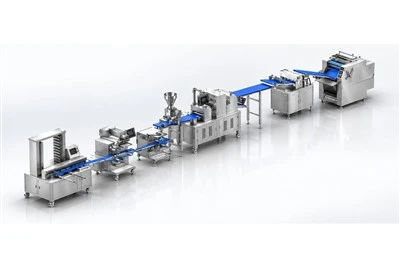
First, you have to stop thinking of dough freshness as a single metric. Most production teams measure it by time: if dough is more than 72 hours old, it’s discarded. But that’s a blunt tool. Freshness in continuous dough refers to its fermentation stage—specifically, the activity of yeast and gluten structure—at the moment it’s molded into pizza bases. Dough that’s been proofed too long gets overly acidic, leading to a harsh, sour flavor, while under-proofed dough tears easily during stretching and bakes into a dense, chewy mess (not the light, crispy crust customers expect). To track this accurately, I now equip my clients with inline dough analyzers that test yeast viability and pH levels in real time. This isn’t a random gadget: in a recent project with a Midwestern regional pizza chain, swapping a manual time-based check for inline testing reduced dough waste by 28% in the first three months. The analyzer flags if a batch is fermenting too fast or slow mid-production, so operators can adjust fermentation conditions before the whole run goes off.
The biggest mistake I see new continuous production line owners make is isolating dough fermentation from the rest of the line. Dough doesn’t exist in a vacuum: the temperature of your mixing room, the speed of your dough divider, and even the humidity in your proofing chamber all tie into how fresh your dough stays through each step. For example, I once worked with a client in Texas where high ambient summer heat made dough ferment 15% faster than in a plant in Minnesota. Their original fixed-temperature fermentation chambers kept the dough 20 degrees too warm, so by the time it reached the mold station, it was over-proofed 40% of the time. The fix wasn’t a full line overhaul—it was adding modular temperature zones to their fermentation tunnel, each adjustable based on the incoming dough’s temperature and ambient plant conditions. Now, their dough stays at a consistent 72 degrees Fahrenheit (the sweet spot for yeast activity) from mixer to molder, cutting over-proofing defects by 60%. Humidity is just as critical: too little humidity, and dough skins over, trapping gas inside and leading to uneven rise during baking. Too much, and dough sticks to dividers or molds, creating inconsistent shapes. I specify closed-loop humidifiers for all my pizza line setups that maintain 85% relative humidity in proofing zones, with sensors that adjust if the line’s speed picks up or slows down.
Next, workflow synchronization is non-negotiable. In a continuous line, every step has to match—if your dough is proofed in 90 minutes, your molder and oven can’t be spaced so that the dough sits idle for another 30. That idle time is where freshness dies. I’ve had clients tell me, “We’re running our line at 12,000 pizzas an hour, it’s fine,” only to find that half their dough is sitting in holding bins after proofing, waiting for the oven to clear. Those 30 extra minutes let yeast continue fermenting past the optimal point, so the final crust loses that soft, yeasty aroma and develops a sour aftertaste. The solution here is line pacing: I work with clients to map their entire production process from mixing to packaging, setting each machine’s speed so that dough moves seamlessly through every step without idle time. For example, if your proofing tunnel moves dough at 2 feet per minute, your molder should match that speed, and your oven’s conveyor should move just fast enough that dough goes straight from molder to oven within 5 minutes. We even add a buffer station only if it’s necessary—no more holding dough for later shifts, because that’s when freshness starts to decline.
Storage, for when the line has to pause, is another make-or-break detail. No continuous line runs 24/7—there are shift changes, maintenance, or unexpected downtime. When that happens, improperly stored dough will go stale or sour fast. I’ve seen clients throw away $10,000 worth of dough during a single maintenance stop because they left it in open bins at room temperature. The fix is controlled, low-temperature holding that slows yeast activity without killing it. I design line-integrated dough holding units that cool dough to 40 degrees Fahrenheit, a temperature that halts fermentation temporarily while keeping yeast viable. This works for short pauses (up to 4 hours) and even longer shifts: if a line goes down overnight, we store dough in these units instead of leaving it in proofing, so when production restarts, the dough only needs a 20-minute warm-up period to get back to optimal freshness. I also train operators to mark dough batches by production time, so older batches are used first—FIFO (first-in, first-out) management, which eliminates the risk of letting dough sit too long on the line.
Quality control isn’t just a final check—it’s a daily practice. Too often, teams test dough only right before packaging, which is too late to fix a bad batch. I recommend a 3-step quality check that happens at every critical point in the line: 1) right after mixing, test dough’s gluten strength and yeast activity; 2) right after proofing, check pH and dough elasticity; 3) right before the oven, do a visual check for consistency. At a pizza line in Florida, we added a spot check where operators gently stretch a dough ball every 15 minutes to test for elasticity. If it tears easily, that means it’s under-proofed, and they can adjust the proofing chamber temperature immediately. If it snaps back too quickly, that’s over-proofing, and they slow down the line’s pace. This hands-on check, paired with the inline analyzers I mentioned earlier, catches 90% of freshness issues before they become defective pizzas. I also push clients to log data from these checks every day—temperature, line speed, batch time—to spot trends. For example, if dough is consistently over-proofed on Tuesday mornings, that might mean the morning shift is starting too fast, so we adjust the proofing tunnel’s pre-heat time to match.
Another trick I’ve learned from years on the floor: avoid over-processing dough. Continuous lines can be tempting to run dough through extra steps—like extra rolling or cutting—to save space, but each step adds contact with air and stress, which accelerates fermentation. I design pizza lines to have as few unnecessary steps as possible: dough is divided, proofed, molded, and sent to the oven without extra handling. For example, I once worked with a client who was adding a manual resting step after molding because their old molder stretched dough too much. We swapped their old molder for a low-stress roller that preserved gluten structure, eliminating the need for the resting step. This cut air exposure time by 25%, keeping dough fresher throughout the line.
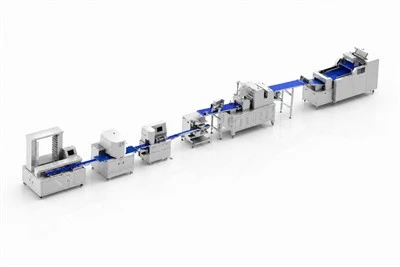
At the end of the day, handling dough freshness in a continuous production line is about understanding that dough is a living product. It changes every minute, every time the line speeds up or slows down, every time the plant’s temperature shifts. You can’t treat it like a commodity; you have to tailor your line’s setup and processes to work with its natural rhythm. If you’re struggling with inconsistent crust quality, high dough waste, or souring pizza bases, I’d be happy to walk through how our production line solutions can align with your needs. We’ve helped dozens of pizza brands streamline their dough processes, cut waste, and serve pizza that tastes fresh every single time. Reach out to our team to talk through your line’s unique challenges and find a solution that works for you.
Pizza Production Line References
- Faridi, H., & Mann, D. (2019). Dough Fermentation and Quality in Continuous Bread Production. Journal of Food Science and Technology, 56(8), 3612–3621.
- American Bakers Association. (2021). Continuous Production Line Best Practices for Fresh Dough Management. Baking Industry Report, 14(3), 22–28.
- Gomez, T., & Lee, S. (2020). The Impact of Line Pacing on Dough Freshness in Commercial Pizza Production. Journal of Food Engineering, 287, 110254.
- Hansen, J., & Jensen, M. (2018). Temperature Control Strategies for Preserving Yeast Viability in Continuous Dough Processes. Food and Bioprocess Technology, 11(10), 1892–1901.
Shanghai Longyu Electro-Mechanic Technology Co., Ltd.
Shanghai Longyu Electro-Mechanic Technology Co., Ltd. is one of the most professional pizza production line manufacturers and suppliers in China, featured by quality products and good service. Please feel free to wholesale advanced pizza production line made in China here from our factory. Also, custom service is available.
Address: No.66, Guangfulin East Road, Zhongshan Subdistrict, Songjiang District, Shanghai, China
E-mail: sales4@longyu-sh.com
WebSite: https://www.longyu-sh.com/
