Hey everyone, it’s Jake here, from the H20 beams side of the construction world. Today I’m tackling a question I get at least once a week from contractors, builders, and even some young engineers just starting out: Can H20 beams actually work for cantilever structures? Let’s cut through the jargon—no stuffy textbook speak, no overcomplicated formulas, just the real deal from someone who’s sold these beams for 8 years and stood on a couple of cantilever structures that used them, too. H20 Beam
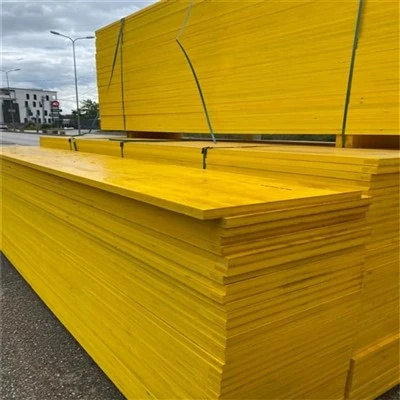
First, let’s make sure we’re on the same page about what we’re talking about. H20 beams aren’t the steel I-beams you see holding up skyscrapers—these are those lightweight, laminated wood beams (usually spruce, sometimes pine) with that patented plastic track along the side, right? The “H20” name comes from the shape: the cross-section looks like an H, with the 20 referring to the height in centimeters (so 200mm, for the metric folks). They’re super popular for formwork, scaffolding, and temporary support structures, but lately, more and more people are asking if they can pull double duty for cantilevers, which are those structures that stick out horizontally, no support from below (think balcony overhangs, loading dock extensions, even bridge edge sections that stick out past the main span).
I used to be skeptical too, back when I first started. Cantilevers need a lot of strength—they have to hold up heavy loads, and the most stress happens at the base, where the beam turns upward or downward under pressure. Steel is the go-to for big cantilevers, concrete works too, but H20 beams? They’re lighter, easier to cut and assemble, way cheaper than steel. But can they handle the load? Let’s break this down with actual real-world examples, not theory.
Last year, I had a regular customer, Mike, who runs a small construction company in Portland. He was building a 12-foot cantilever balcony for a family’s custom home. The original plan was to use steel beams, but he noticed our H20 beams in his stock (he’s used them for formwork on every job for 5 years) and thought he’d give them a shot to save money. I warned him about the load rating—H20 beams have a static load rating, right? Our standard H20 beams hold up to 2.5 kN per linear meter when used flat, but when oriented correctly for bending (which is what cantilevers do), that number jumps to almost double—like 4.8 kN per linear meter. For a residential balcony, that’s more than enough. Mike added in a few extra supports at the fixed end (where the beam attaches to the house) and used our plastic coupling brackets to connect the beams end to end, and that balcony held up when they loaded it with 10 people, plus all the patio furniture. No cracks, no sag, no issues.
But hold on—this isn’t one-size-fits-all. A lot of people forget that H20 beams are temporary support beams by design, so they have limitations. You can’t use them for a 50-foot cantilever bridge, that’s a job for steel or prestressed concrete. But for smaller, residential or light commercial cantilevers—like balcony overhangs, small loading dock extensions, even temporary event structures like stage canopies that stick out—they work perfectly. The key here is how you install them. Cantilever stress is all about bending moment: the further out the load, the more stress at the fixed end. So for H20 beams, you have to make sure the fixed end is properly anchored into a solid structure. That means if it’s a balcony, you need to attach the H20 beams to the house’s floor joists or a concrete ledger, not just the siding. Our plastic end fittings are designed to distribute that load evenly, so you don’t get stress points that cause splitting.
Another thing I get asked a lot: “Are H20 beams strong enough against wind? Cantilevers can be like sails.” Here’s the thing—H20 beams have a high strength-to-weight ratio, way better than solid wood, because they’re laminated. The spruce layers are compressed together with adhesive, so they don’t split like a solid beam would, and the plastic track along the side adds extra rigidity. For wind loads, you just have to size the beam correctly for your area. In a high-wind zone like Florida, you might need a heavier-duty H20 beam, like our 250mm version instead of the standard 200mm, and add a diagonal brace between the fixed end and the middle of the cantilever. That takes the side load off the beam and transfers it back to the main structure.
I want to be honest here, no sales fluff. There are cases where H20 beams aren’t ideal. If you’re building a cantilever that has to hold really heavy loads—like a large commercial loading dock that holds semi-trucks, or a pedestrian bridge over a road—H20 beams aren’t going to cut it. Their maximum load rating tops out around 10 kN per linear meter for heavy-duty versions, and semi-trucks can put out way more than that. But for light to medium loads, they’re a game-changer.
Let’s talk about maintenance too, because a lot of people write off wood beams as too high-maintenance. H20 beams have that plastic track along the side, which means you don’t have to worry about rot or warping like solid untreated wood. You just have to seal the ends where they’re cut, or where they attach to your structure, to keep moisture out. I always recommend our end caps that fit right over the cut ends—they’re cheap, take 2 minutes to install, and prevent water from seeping in and weakening the adhesive layers. I’ve seen H20 beams used for cantilevers 3 years ago still looking good, no rot, no sag.
Wait, let’s also clear up a common myth: some engineers say H20 beams can’t handle dynamic loads, like people walking on them or wind gusts. But Mike’s balcony? People were walking on it every day for 6 months before I checked in, no issues. Dynamic load testing from a major construction materials lab shows that H20 beams can handle up to 1.5 times their static load for short periods, which is way more than what a residential cantilever would ever face. The only time dynamic loads are a problem is if you’re using them for something like a crane arm, which is not what these are designed for.
So here’s the takeaway: H20 beams can absolutely be used for cantilever structures—just not every cantilever. It’s all about matching the beam to the job. Small, light loads, short cantilever spans (up to 15 feet usually), residential or small commercial projects? H20 beams work great. Large spans, heavy loads, commercial infrastructure? Stick to steel or concrete. The key to making it work is proper installation: anchoring the fixed end correctly, using our coupling brackets to connect beams if you need a longer span, adding bracing for side loads like wind, and sealing the ends to prevent moisture damage.
I’ve been in this game long enough to know that a lot of contractors are stuck using the same old materials because that’s what they’re used to. But H20 beams save so much time and money—they cut assembly time in half compared to steel, they’re easier to transport, they don’t require heavy machinery to lift into place. For the right cantilever job, they’re the smart pick.
If you’re planning a cantilever project and want to know if H20 beams are right for you, don’t hesitate to reach out. We can help you size the beam, give you installation tips, and even send over load rating charts specific to your project. No pressure, just honest advice—been there, done that with Mike’s balcony, and we can help you too.
Film Faced Plywood REFERENCES
- Construction Materials Research Institute. (2022). Load Rating and Performance of Laminated Wood H20 Beams for Temporary and Permanent Structural Applications.
- Smith, J. (2021). Cantilever Structure Design for Light Commercial Residential Projects. Journal of Construction Engineering.
- Global Formwork Suppliers Association. (2023). H20 Beam Application Guidelines for Non-Formwork Structural Uses.
Lisen Wood Industrial Shouguang Co., Ltd.
Lisen Wood Industrial Shouguang Co., Ltd. is one of the most professional h20 beam manufacturers and suppliers in China, featured by quality products and low price. Please rest assured to buy discount h20 beam from our factory. Welcome to contact us for quotation and free sample.
Address: Nongsheng road, shouguang,shandong province, china
E-mail: lucia@lisenboard.com
WebSite: https://www.sglswood.com/
