If you’ve ever worked with vacuum pumps—whether for semiconductor manufacturing, food packaging, or lab research—you know their reliability hinges on a tiny, often overlooked component: the bearing. I’m the owner of a vacuum pump bearings supply business, and over the past 12 years, I’ve lost count of how many times a client has called me at 3 a.m. because their pump seized mid-operation, only to trace the root cause back to a bearing made with the wrong material. Vacuum pumps operate in extreme environments: high speeds, extreme temperatures, corrosive gases, and in some cases, near-total vacuums that would make regular bearings fail within hours. So when we source or manufacture bearings for our clients, material isn’t a “nice-to-have”—it’s the foundation of every reliable vacuum pump. In this post, I’m breaking down the most common vacuum pump bearing materials, how they perform, and when to pick one over the other, based on what I’ve seen keep our clients’ pumps running for years. Vacuum Pump Bearings
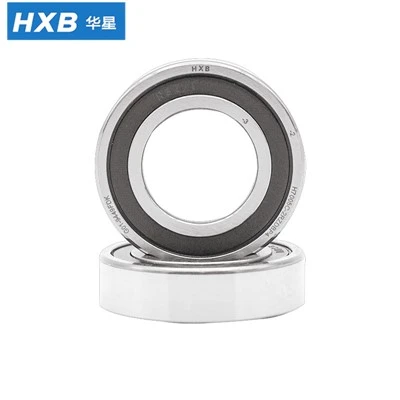
1. Chrome Steel (AISI 52100): The Workhorse for General-Purpose Applications
If you’ve walked into our warehouse, you’ve seen stacks of chrome steel bearings in sizes ranging from tiny 10mm units to heavy-duty 80mm models. For decades, chrome steel (specifically AISI 52100) has been the go-to material for standard vacuum pumps because it strikes a near-perfect balance of cost, hardness, and wear resistance that fits most routine applications. Here’s the science behind why it works for vacuum use: AISI 52100 has a Rockwell hardness rating of 60–64 HRC after heat treatment, which is harder than most regular carbon steels, so it handles the constant rolling and sliding of pump shafts without deforming. It also has a low porosity surface, which is critical in vacuum systems—porosity would trap gas molecules, leading to leaks that reduce pump efficiency over time.
That said, chrome steel isn’t for every vacuum job. It has a maximum operating temperature of around 120°C (248°F), so if you’re running a high-temperature oven vacuum pump or a molecular pump that hits 200°C, chrome steel will start to soften and wear prematurely. It’s also susceptible to corrosion from acidic or moisture-laden process gases—something common in food processing vacuum pumps or semiconductor manufacturing’s wet etch lines. For our clients who use standard rotary vane vacuum pumps for woodworking or small packaging lines, chrome steel bearings are our top recommendation: they’re affordable, easy to source, and last 1–2 years with regular maintenance. Last quarter, a woodworking client in Michigan emailed us saying their chrome steel bearings had run their rotary vane pump 16 hours a day for 18 months before needing replacement—proof of their durability for general use.
2. Stainless Steel (300 Series): The Corrosion-Resistant Workhorse for Harsh Environments
When a client calls needing bearings for a vacuum pump that handles corrosive gases, my first question is always: “What grade of stainless steel?” Most of the time, the answer is 300 series stainless steel—specifically 316L, the most common grade for vacuum applications. Unlike chrome steel, 316L stainless steel contains molybdenum, which gives it excellent resistance to pitting and corrosion from acidic compounds, salt, and moisture. It also has much better vacuum compatibility than chrome steel: it outgasses far fewer volatile organic compounds (VOCs) when exposed to high vacuums, which is non-negotiable for semiconductor manufacturing or pharmaceutical vacuum systems where even trace contaminants can ruin products.
But 300 series stainless steel has a catch: it’s softer than chrome steel, with a Rockwell hardness of around 40–50 HRC. That makes it more prone to wear at high speeds or heavy loads—something to consider for vacuum pumps running at 10,000+ RPM, like turbomolecular pumps. To fix this, we often use heat-treated 316L stainless steel, which brings its hardness up to 55–58 HRC, close to chrome steel, without sacrificing corrosion resistance. For our clients in the pharmaceutical industry, who use vacuum pumps to lyophilize (freeze-dry) drugs, 316L stainless steel is non-negotiable. The process uses pure water vapor, but residual traces of pharmaceuticals and cleaning agents would corrode regular bearings, leading to cross-contamination between batches. I’ve seen 316L bearings in those applications last 3–5 years with proper cleaning, which is a huge win for a sector where downtime costs tens of thousands of dollars an hour.
3. Ceramic (Silicon Nitride, Si₃N₄): The High-Performance Choice for Extreme Conditions
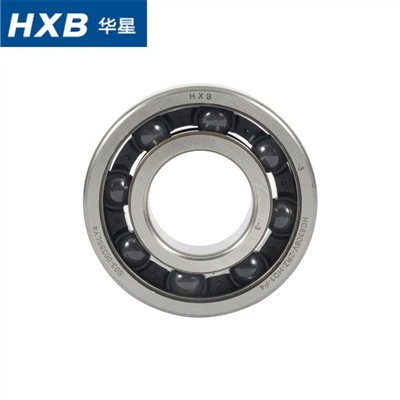
For the most demanding vacuum applications—think space simulation chambers, high-speed turbomolecular pumps, or vacuum furnaces—ceramic bearings are the only option. The most common ceramic material for vacuum use is silicon nitride (Si₃N₄), and it’s a game-changer for reasons that make it perfect for extreme environments. First, silicon nitride has an extremely high melting point (over 1,800°C, or 3,270°F), so it can operate at temperatures up to 1,200°C—way higher than any steel could handle. It’s also 40% lighter than steel, which reduces centrifugal force at high speeds, letting turbomolecular pumps spin at 90,000+ RPM without failure.
Most importantly for vacuum systems, silicon nitride has a near-zero outgassing rate. Unlike steel, which can release trapped gas molecules when exposed to high vacuums, ceramic is a non-porous, stable material that won’t contaminate the vacuum chamber. That’s why NASA uses silicon nitride bearings in space simulation pumps, and why semiconductor fabs rely on them for their ion implantation systems, where even a single gas molecule can ruin a microchip. The only downside? Ceramic bearings are 2–3 times more expensive than steel or stainless steel, and they’re more brittle—so they can crack if hit with heavy loads. For that reason, we only recommend them for applications where the cost of downtime from a failed steel bearing would far outweigh the cost of the ceramic bearing. Last year, a semiconductor client in Arizona switched from chrome steel to silicon nitride bearings in their turbomolecular pumps, and reported a 95% reduction in unplanned downtime—saving them over $200,000 in lost production in 12 months.
4. Polyimide (Thermoplastic): The Low-Lubrication, Dry Vacuum Solution
Let’s not forget about dry vacuum pumps—those that operate without oil or grease, common in labs or applications where oil contamination is a problem, like food packaging or medical device manufacturing. For these pumps, regular metal bearings will seize quickly because they lack lubrication. That’s where polyimide (PI), a high-performance thermoplastic, comes in. Polyimide is a self-lubricating material, meaning it has built-in solid lubricants that reduce friction without needing oil or grease, so it works perfectly in dry vacuum environments. It’s also highly resistant to high temperatures (up to 250°C) and has very low outgassing, so it won’t contaminate sensitive processes.
But polyimide isn’t for general vacuum use. It has lower hardness and load capacity than metal, so it’s only suitable for light loads and low-speed dry vacuum pumps. For our clients who run dry pumps in university labs for chemistry experiments—where oil contamination would ruin samples—polyimide bearings are the only practical choice. I once had a client from a biotech startup call us panicking because their dry pump’s metal bearings seized, ruining their entire experiment on monoclonal antibodies. We sent them custom polyimide bearings that day, and they’ve been running the pump reliably for 3 years now.
Why Material Selection Is Personal to Your Vacuum Pump
Here’s what I always tell new clients: there’s no “one-size-fits-all” vacuum pump bearing material. A small lab vacuum pump for filtering water needs a different bearing than a 100-cubic-meter industrial vacuum furnace. Let’s break down the key factors I walk clients through when choosing:
- Vacuum Level: High-vacuum systems (10⁻⁷ Torr or lower) need low-outgassing materials like ceramic or 316L stainless steel; rough vacuum systems (10⁻³ to 1 Torr) can use chrome steel.
- Temperature: If your pump runs above 150°C, skip steel and go for ceramic or polyimide (for dry pumps).
- Process Gases: If you handle corrosive gases (acids, chlorine, pharmaceutical residues), use 316L stainless steel or ceramic; for dry systems with contamination risks, use polyimide.
- Speed and Load: High-speed turbomolecular pumps need ceramic; low-speed, light-loaded pumps can use chrome steel or polyimide.
Let’s Talk About Your Vacuum Pump Needs
Electric Motor Bearings After 12 years as a vacuum pump bearings supplier, I’ve learned that most clients don’t just need a bearing—they need a reliable partner who can guide them through the material choices that keep their pumps running, minimize downtime, and save money in the long run. Whether you’re replacing bearings in a standard rotary vane pump, upgrading a semiconductor’s turbomolecular pump, or outfitting a new dry vacuum system, I have the expertise to help you pick the right material for your application. If you’re dealing with a persistent bearing issue, or just want to learn more about how our bearings can improve your pump’s performance, don’t hesitate to reach out to our team to discuss your needs.
References
- Harris, T. A., & Kotzalas, M. N. (2007). Rolling Bearing Analysis. Wiley.
- O’Connor, J. J., & Boyer, J. (1990). Standard Handbook of Lubrication Engineering. McGraw-Hill.
- Rowe, W. B. (2012). Ceramic Bearings for High-Performance Applications. CRC Press.
- American Vacuum Society. (2019). Vacuum Technology and Applications. AVS Science and Technology Series.
Hangzhou Huaxing Kechuang Holding Group Co., Ltd.
Hangzhou Huaxing Kechuang Holding Group Co., Ltd. is one of the leading manufacturers and suppliers of vacuum pump bearings in China, featured by quality products and good service. Please rest assured to buy bulk durable vacuum pump bearings from our factory. Welcome to view our website for more information.
Address: No.553 Yingbin Road, Linping, Hangzhou, 311100, China
E-mail: wmb@huaxingbearing.com
WebSite: https://www.hxbbearing.com/
