If you’ve ever worked with hydraulic or pneumatic systems, you’ve probably stepped over a step seal without even noticing. These unassuming little components are the unsung heroes that keep fluid where it belongs and dust, dirt, and air out. But here’s the thing—even the best step seal is useless if you pair it with the wrong lubricant. As someone who’s been supplying step seals for over a decade, I can’t tell you how many times customers reach out, ask about seal specs, and then follow up with, “Wait, what oil do I use with this thing?” It’s a question that makes or breaks their system’s performance, and today we’re breaking it down like I would over a coffee at a trade show booth. Step Seal

First, let’s get the basics straight for anyone who’s new to step seals. A step seal is a single-piece (or sometimes two-piece) seal with a “step” on one side—its whole job is to separate two pressure zones in a cylinder: one high-pressure, one low-pressure. Unlike O-rings, which work by squeezing against a surface, step seals rely on that step to redirect pressure so it doesn’t leak past. That design means they operate in super specific environments: high pressure spikes, fast cycles, fluctuating temps, and sometimes even exposure to water or chemicals. So why does lubricant matter here? Because step seals slide back and forth against a rod or bore hundreds (or thousands) of times a minute, and friction is their kryptonite. Too little lube, and the seal wears out in weeks—even if it’s rated for years. Too much of the wrong lube, and you get seal swell, chemical degradation, or even pressure leaks that force your whole system to shut down.
Let’s start with the most common scenario: hydraulic step seals for industrial equipment. If you’re running a forklift, a construction excavator, or a factory conveyor, your hydraulic fluid is usually a mineral-oil-based hydraulic fluid. That’s the bread and butter for 80% of step seal applications, and it’s actually the easiest pair to get right. Here’s the catch: not all mineral oils are created equal. If you’re using a low-quality, non-additivized mineral oil that’s been sitting in a barrel for years, skip it. Step seals—most commonly made from materials like polyurethane (PU) or NBR (nitrile rubber)—need lubricants with anti-wear (AW) additives and corrosion inhibitors. Those additives don’t just keep the oil from breaking down; they form a thin protective layer between the seal and the rod, which cuts friction and prevents micro-scratches that lead to leaks. I had a customer last year, a small construction company, who swore their step seals were dying every 3 months. Turns out they were using cheap 10-weight mineral hydraulic oil straight from the auto parts store instead of the 32 or 46-weight AW hydraulic oil we recommended. Swapped the lube, and the seals lasted 18 months. That’s the kind of win that makes my job worth it.
But what if you’re dealing with something way harsher? Let’s talk about pneumatic step seals or applications where fluid isn’t oil—like compressed air, food-grade systems, or environments with extreme temps. Compressed air is dry, right? That’s a problem. Step seals running in pneumatic cylinders don’t get the natural lubrication that hydraulic systems do, so you need a lubricant that’s either air-compressor oil (for lubricated pneumatic systems) or a solid lubricant additive. We often recommend Polytetrafluoroethylene (PTFE) dispersed in a grease or a synthetic air-compressor oil here. PTFE is perfect because it’s low-friction, doesn’t break down in dry air, and doesn’t swell the most common step seal materials (like PU). For customers running unlubricated pneumatic systems—think medical devices or small packaging machines—we even have step seals molded with a tiny amount of PTFE right into the material. No extra lube needed, and it lasts through thousands of cycles.
Then there’s food and beverage processing, which comes with a whole different set of rules. The USDA and FDA don’t just let you use any random lubricant here—anything that touches a food-grade step seal has to be H1-rated. That means it’s safe for incidental food contact (like a tiny amount getting into a jar of peanut butter, for example). I can’t tell you how many food processing plant managers have tried to use regular mineral oil or even vegetable oil (yes, vegetable oil) on their step seals. Vegetable oil is a disaster— it gets gummy, goes rancid in 6 months, and swells NBR seals so bad they stop sliding. H1 lubricants are usually synthetic, either polyalphaolefin (PAO) or polyalkylene glycol (PAG) based. We recently supplied a batch of food-grade step seals to a craft brewery’s bottling line, and they swear by it—no leaks, no contamination, and the seals have held up through 2 years of daily use. If you’re working in food, don’t skip this part. The wrong lube can cost you a line shutdown, a product recall, or worse.
What about extreme temperatures? If your system is running in freezing cold (like a snow plow in Minnesota) or roasting heat (like a mining drill in Arizona), regular mineral oil will either turn into sludge or evaporate. That’s when synthetic lubricants come into play. PAO-based synthetic oils are the go-to for low temps—they stay flexible at -40°F, which is way better than mineral oil that gets thick and sticky. For high temps, we use ester-based synthetics. Ester oils don’t break down at 300°F, and they don’t react with common step seal materials. A mining customer of ours was running a drill in a desert mine where temps hit 120°F and sometimes spiked higher. They were using mineral oil, and seals were blowing out every week. Switched to ester-based lube, and seals lasted 6 months. Game changer.
Now, let’s talk about the big no-nos. There are a few lubricants you should never touch with a step seal. First, don’t use petroleum-based grease if your seal is made of ethylene propylene diene monomer (EPDM). Wait, EPDM is usually for static seals, but sometimes people use it for step seals in water systems. EPDM reacts badly with petroleum grease—it swells and degrades fast. Second, never use silicone-based lubricants on PU step seals. Silicone can break down the polyurethane’s molecular structure over time, leading to cracks and leaks. Third, if your step seal is for a water-based hydraulic system (like a machine that uses water instead of oil to avoid contamination), use a water-glycol fluid, but make sure it’s compatible with your seal material. Most step seals are compatible with water-glycol, but a small number of low-grade ones will swell if you don’t pair them right. I’ve seen customers skip checking that and end up with a cylinder full of slime and a broken production line.
Wait, one more thing: viscosity matters almost as much as the type of lube. Viscosity is just a fancy word for “thickness.” If your step seal is running in a small, fast cylinder, a low-viscosity (thin) lube will work better—less friction, faster cycles. If it’s a big, slow cylinder with high pressure, a higher-viscosity (thicker) lube will form a better protective film and prevent leaks. I always tell customers to check their cylinder’s speed and pressure, then cross-reference that with the lube viscosity chart on our website. It’s not rocket science, but it’s the difference between a working system and a broken one.
At the end of the day, the right lubricant for a step seal depends on three main things: your application (hydraulic vs pneumatic, food vs mining), the seal material (PU, NBR, EPDM), and the operating conditions (temp, pressure, speed). If you’re still not sure, don’t guess. I’ve been supplying step seals for years, and I’d rather take 10 minutes to walk a customer through choosing the right lube than hear back a month later that their seals are failing. We can even send a sample of our step seals and a compatible lubricant to test for a week—no strings attached.
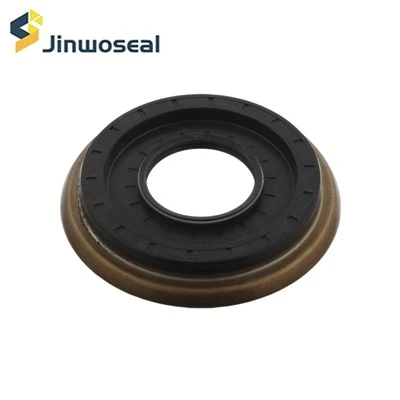
If you’re tired of seals that wear out too fast, leak when you need them most, or cause unplanned shutdowns, reach out to chat through your specific setup. We don’t just sell step seals—we make sure they work for you. Don’t waste time and money on the wrong lube or the wrong seal. Let’s get this right the first time.
Oil Pump Seal References:
- Hydraulic Seal Technology: Selection and Application, Society of Manufacturing Engineers, 2021.
- Pneumatic System Design and Lubrication, Air & Hydraulic Institute, 2022.
- FDA Food-Grade Lubricant Requirements for Process Equipment, U.S. Food and Drug Administration, 2023.
- Polyurethane Seal Compatibility with Lubricants, Elastomer and Seal Council, 2020.
Hebei Jinwo Machinery Technology Co., Ltd.
Hebei Jinwo Machinery Technology Co., Ltd. is one of the most professional step seal manufacturers and suppliers in China, featured by quality products and good price. Welcome to buy bulk advanced step seal in stock here and get pricelist from our factory. We also accept customized orders.
Address: Room 2109, Tower A, Meidong International, No.16 Guang’an Avenue, Chang’an District, Shijiazhuang City, Hebei Province, China
E-mail: info@jinwoseal.com
WebSite: https://www.jinwoseal.com/
