Hey folks, let’s cut to the chase – if you’re in automotive, aerospace, heavy machinery, or even the small gear parts for that custom bike build you’re tinkering with, you know how critical perfectly cut gears are. Mess up the tooth profile, the pitch, or the runout, and you’re looking at noisy equipment, premature wear, or even a total breakdown. That’s where a CNC gear hobbing machine comes in, and as someone who’s been supplying these machines for the last 12 years (I’ve got scars from troubleshooting field issues, so I’m not just a sales guy with a spec sheet), let me break down how these bad boys actually work – no jargon overload, just the real stuff that matters. CNC Gear Hobbing Machine

First, let’s get one thing straight: a gear hobbing machine isn’t a lathe, isn’t a milling machine, and it’s not just “a CNC machine for cutting gears.” It’s a specialized tool that makes straight, helical, even spline gears by using a cutting tool called a hob – kind of a giant, threaded worm gear with sharp, staggered teeth cut into it. Here’s where the magic starts: unlike manual hobbing machines that required a guy with a degree in gear geometry to tweak every gear, CNC versions automate the whole sync that used to go wrong so often. Let’s walk through the step-by-step, like you’re standing right next to the machine watching it run.
First, setup. You load the blank gear (that’s the raw metal part – steel, aluminum, brass, whatever) onto a workholding spindle. This isn’t just a three-jaw chuck, by the way – for precision gears, it’s usually a collet or a custom fixture that clamps the blank dead center. Why? Even a tiny shift in the blank’s position throws every tooth’s alignment off. Next, you mount the hob on a separate spindle, called the hob arbor, angled just right. That angle is key – straight gears need the hob at a 90-degree angle minus the hob’s lead angle; helical gears? You angle the hob even more to match the helix of the gear you’re cutting. I’ve seen new operators mess this up so many times – they angle it wrong and end up with helical teeth that look like they’re crooked, not cut on purpose. That’s the kind of mistake that gets you a frantic 2AM phone call from a shop that just ruined a $500 steel blank.
Now the big part: the sync between the hob spindle and the work spindle. This is where the “CNC” part earns its keep. On a manual machine, you had a big set of change gears you’d swap out every time you wanted a different gear size – if you needed a 24-tooth gear, you swapped a gear set to get a 24:1 ratio; a 30-tooth? Another set. That sucked for small batch runs, right? If a customer needed 10 custom gears, you spent more time swapping change gears than actually cutting parts. With CNC, the machine’s controller handles that sync – no physical gears needed. The controller calculates exactly how fast the hob has to spin relative to the blank to get the right number of teeth. Let’s make that simple: if your hob is a single-start thread, every full turn of the hob makes one tooth on the gear. So for a 48-tooth gear, the blank spins exactly once for every 48 turns of the hob. That’s the core sync. For a multi-start hob (some hobs have 2, 3, even 5 threads to speed up cutting), the ratio changes – 2-start hob means blank spins once for every 2 hob turns, so you still get the same number of teeth. The controller adjusts both spindles’ speed in real time, not just set it once.
Next, the cutting motion. The hob doesn’t just spin – it’s moving parallel to the blank’s axis, feeding into the blank slowly. This is the feed rate, measured in inches or millimeters per revolution of the blank. Too fast, and you break the hob or leave burrs that need extra finishing work. Too slow, and you’re wasting hours on a job that should take 15 minutes. CNC machines use linear scales on both the hob’s feed axis and the work spindle to adjust this on the fly, so if the metal’s a little harder than expected, it dials back the feed. No more guessing based on a metal spec sheet – I’ve had shops run a batch of gears through, and half way through, they switch to a slower feed because the steel batch was from a different mill and had higher carbon content. The CNC machine can handle that without stopping to reset anything.
Wait, let’s talk about the hob’s teeth themselves. Each tooth on the hob is actually a cutting edge shaped like a gear tooth – that’s why the machine doesn’t just machine the blank, it forms the exact tooth profile you need. The hob’s teeth are staggered, so each pass cuts a little bit more material, and you do multiple roughing passes then a finishing pass. Roughing passes remove most of the material fast, finishing takes off a thin layer to get the surface finish right – usually around Ra 1.6 or better for automotive gears, which is where noise and durability matter. On older machines, you had to change the feed depth between rough and finish manually, but CNC lets you program multiple depth cuts, so the machine handles all of that automatically. That’s why CNC hobbing machines cut way more parts per hour with fewer errors.
Now, let’s debunk a common myth: people sometimes confuse hobbing with shaping, but shaping uses a reciprocating cutter that cuts one tooth at a time, while hobbing cuts multiple teeth in one pass because the hob’s threads wrap around the blank. That’s a huge time saver, especially for large gears – if you’ve got a 3-foot diameter gear for a wind turbine, shaping would take days, hobbing takes a fraction of the time. Also, CNC hobbing machines can do things manual machines never could, like cutting splines, sprockets, even non-circular gears if you program the controller right. I sold a machine last year to a small farm equipment shop that makes custom sprockets for old tractors – before, they were buying expensive custom cutters, but now they just upload a design to the CNC and make the part themselves. That’s the game changer with CNC vs old manual.
Wait, what about quality control built into modern machines? A lot of the machines we supply have in-process probes – right after cutting each gear, the probe touches a few teeth to measure tooth thickness, pitch, and runout. If there’s a tiny deviation (like 0.001 inch, which is super small), the controller adjusts the next gear’s cut to fix it. No more waiting until the whole batch is done to find out you’ve got bad parts. That’s something you can’t do with a manual machine – you had to measure every tooth individually, which took forever.
Let’s also talk about why this matters for your operation. If you’re a small shop, you might be weighing the cost of a CNC hobbing machine vs manual. The short version: even with the upfront cost, you’ll make that back in a year or two on labor savings, less scrap, and the ability to take on jobs you couldn’t before. If you’re a big manufacturer, it’s all about consistency – every gear off the line is the same, no variation between batch runs, which is critical for things like automatic transmissions where gears have to mesh perfectly.
Now, let’s get to how this all ties to what we supply. We don’t just sell a box that cuts gears – our machines are built with the sync accuracy to within 0.0005 inch, the linear scales that don’t drift, and easy programming so even if you’re not a gear design expert, you can upload a DXF or a gear spec from a customer and get a good part. I work with a lot of first-time users, and the biggest mistake they make is overcomplicating the programming. Our techs walk you through setting up the first job, so you don’t have to call at 8PM panicking because you messed up the hob angle.
Wait, let’s wrap this up so it’s not just a spec dump. The core working principle is really three parts: 1) a rotating hob with a gear-shaped tooth profile, 2) a perfectly synced rotation between the hob and the gear blank to match tooth count, handled automatically by the CNC controller, and 3) a controlled feed of the hob into the blank to cut the exact profile you need, with in-process checks to keep quality tight. That’s it. No magic, just precision automation that replaces the old manual skill that was only taught to a handful of old-school machinists.
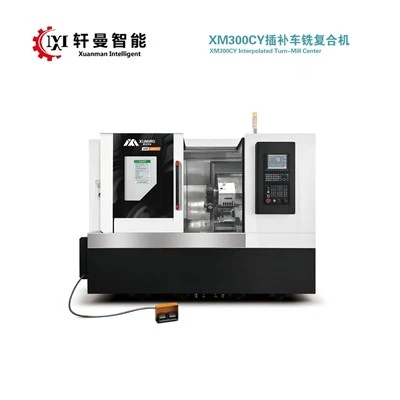
If you’re at the point where you’re tired of losing jobs because your gear cutting is too slow, or your scrap rate is through the roof, we should chat. Whether you’re a small shop looking to add gear capability or a big manufacturer scaling up, our machines are built for real-world use – not just showroom demos. We’ll send a tech out to walk you through a test run with your own material, no pressure. Hit us up to talk through your needs, and we’ll make sure you get a machine that fits, not just a sales pitch.
Flat Bed CNC Lathe References
- Gear Technology Magazine. (2022). "CNC Gear Hobbing: Fundamentals and Best Practices." Gear Solutions International.
- American Society of Mechanical Engineers (ASME). (2019). B94.17: Safety Requirements for Gear Hobbing Machines.
- Manufacturing Engineering and Technology (7th Ed.). Kalpakjian, S., & Schmid, S.R. (2017). Pearson Education.
- Modern Machine Shop. (2021). "How CNC Hobbing Transforms Small Batch Gear Production." Modern Machine Shop Media Group.
Jiangsu Xuanman Intelligent Equipment Co., Ltd.
As one of the most professional CNC gear hobbing machine manufacturers in China, we’re featured by quality products and low price. Please rest assured to buy discount CNC gear hobbing machine made in China here from our factory. Customized orders are welcome.
Address: No.1-1, Weier Road, Jieji Equipment Manufacturing Industrial Park, Sihong County, Suqian City, Jiangsu Province, China
E-mail: jsxmzn@163.com
WebSite: https://www.xm-machs.com/
