If you’ve ever stopped to think about how a grocery store’s conveyor belt sorts your apples, a electric wheelchair glides smoothly across a parking lot, or a 3D printer pulls off a crisp layer of a plastic toy, there’s a good chance a permanent magnet DC (PMDC) motor was powering that action. I’ve spent the last 12 years standing behind the counter of this PMDC motor business, answering calls from small robot builders and industrial plant engineers alike, and one question comes up more often than any other: “What’s the power range I can get from a PMDC motor?” It’s not a one-size-fits-all answer, and it’s the kind of question that makes us stop and think about what our customers actually need, not just what specs look good on a datasheet. Permanent Magnet DC Moto
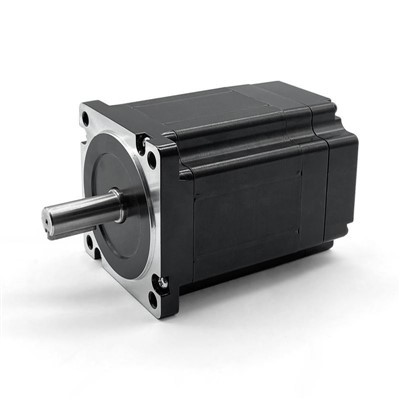
Let’s start with the basics, because I’ve seen too many engineers skip over this and end up with a motor that’s either too tiny to do the job or too bulky to fit their design. Unlike other motor types that use electromagnets to create torque, PMDC motors have permanent magnets mounted on their stator (the stationary part of the motor) instead. That little design tweak is why they’re so efficient, so reliable, and so perfect for low-speed, high-torque applications—things like door locks, small water pumps, or the arm that moves a robotic vacuum. But it also sets clear limits on their power, both on the low end that most people never even think about, and the high end that surprises folks who assume PMDC motors are only for tiny projects.
On the absolute low end, we’re talking about motors that put out less than 1 watt. These are the workhorses of tiny, battery-powered gadgets: the vibration motor in your phone that alerts you to a text, the motor that adjusts the mirror on your car, or the little fan that cools a hearing aid. I remember a customer a few years back who built custom, ultra-portable blood glucose monitors for diabetic patients—they needed a motor so small it could fit inside the device’s casing, and it only needed enough power to move a tiny lever that releases a test strip. We sent them a 0.3 watt PMDC motor, and they told us later it worked better than any other motor they’d tested because it didn’t draw much power, so it extended the device’s battery life by 30%. That’s the thing about low-end PMDC motors: they’re not weak, they’re optimized for precision and minimal power draw, which is exactly what a lot of small, specialized applications need.
Move up a notch, and we hit the sweet spot that most of our customers operate in: 1 watt to 1,000 watts (1 kilowatt, or kW). This is where you’ll find the motors powering everything from electric scooters and mobility aids to small agricultural equipment and automation conveyors. Let me give you an example: last quarter, we worked with a small startup that’s building electric tugs for warehouses—machines that pull pallet jacks across loading docks. They needed a motor that could pull a 2,000-pound pallet at 3 miles per hour, and their design limited the motor’s size to 6 inches in diameter. A 1.2 kW PMDC motor was the perfect fit here: it gave them enough torque to move the heavy load, was small enough to mount under the tug’s frame, and was 15% more efficient than the brushless DC motor they’d considered. That efficiency means less battery use, which translates to lower operating costs for the warehouse owners—something that matters a lot when you’re running a 10-hour shift.
A lot of people ask me if PMDC motors can go beyond 1 kW, and the answer is yes, but not as far as you might think. Until about 10 years ago, the upper limit for PMDC motors was around 5 kW, but advances in magnet technology—specifically the development of high-grade neodymium magnets—have pushed that up to around 10 kW today. These high-power PMDC motors are used in applications that need a lot of torque but still benefit from the motor’s simplicity. For example, small electric lift gates on delivery trucks use a 7.5 kW PMDC motor because it can lift hundreds of pounds quietly and reliably, with fewer moving parts than a comparably powerful AC motor. We also supply PMDC motors in this range for small marine trolling motors—they need enough power to pull a fishing boat through the water, and since they run off a 12-volt or 24-volt battery, the DC design is a natural fit.
Now, I want to be clear: there is a limit here. You’re not going to find a 100 kW PMDC motor for a semi-truck or a factory conveyor that moves tons of material. At power levels above 10 kW, the size and cost of the permanent magnets get prohibitively high, and the heat generated by the motor starts to degrade the magnets over time. That’s why for very high-power applications, AC motors or brushless DC motors are the go-to choice. But for the vast majority of applications our customers come to us with, PMDC motors hit the sweet spot between power, efficiency, and cost.
I’ve spent enough time working with customers to know that power range isn’t the only thing that matters. When a builder is trying to design a custom robot or a new medical device, they don’t just ask “what’s the power range?” They ask: “will this motor fit in my casing?” “How long will it run on a single charge?” “Can I get it with a gearbox to adjust the speed?” “How much maintenance will it need?” That’s why we don’t just sell off-the-shelf motors—we work with customers to tailor the power, size, and even the voltage of their motor to their specific needs. For example, we recently adjusted the power of a 2 kW motor for a customer building electric wheelchairs: originally they wanted 2 kW, but when they tested their prototype, they realized they only needed 1.7 kW to get the top speed they wanted, and dropping the power by 0.3 kW cut the motor’s cost by 8% and extended the battery life by 20%. That’s the kind of detail that only comes from actually working with motors day in and day out, not just reading specs.
Another common misconception I hear is that PMDC motors are old technology, that they’ve been replaced by newer motor types. I push back on that hard, because every year we get new applications that show how useful they still are. Last year, we supplied a customer building automated greenhouse ventilation systems with a set of 500 watt PMDC motors. The systems need to open and close vents based on temperature and humidity, and the motors need to run quietly, be durable enough to withstand outdoor weather, and draw very little power from small solar panels. A brushless motor would have worked, but it was twice as expensive and drew more power, so the PMDC motor was the clear choice. They’ve now installed over 2,000 of these systems across the country, and they keep coming back to us for replacements and new orders.
If you’re in the market for a PMDC motor, here’s what I want you to keep in mind. First, don’t just fixate on the maximum power rating. Look at the duty cycle: how often will the motor be running? If it’s a continuous run, like a conveyor belt, you’ll want a motor rated for continuous power, not just peak power. If it’s intermittent, like a wheelchair that only runs a few minutes at a time, you can go a bit lower on continuous power. Second, size matters as much as power. A 1 kW motor for a small robot is a lot different from a 1 kW motor for a warehouse tug—make sure you know how much space you have to mount it. Third, don’t be afraid to ask for customization. Most of the motors we sell aren’t off-the-shelf; we adjust windings, add gearboxes, or change the voltage to fit exactly what a customer needs.
At the end of the day, the power range of PMDC motors is flexible, it’s tailored to what you need it for, and it’s one of the reasons they’re still such a popular choice across so many industries. Whether you’re building a tiny medical device that needs a 0.5 watt motor, a warehouse tug that needs 1.2 kW, or a trolling motor that needs 7.5 kW, there’s a PMDC motor that fits. We’ve spent 12 years figuring out how to deliver those motors, how to work with customers to get exactly what they need, and how to back up every order with support and after-sales service.
If you’re ready to learn more about what PMDC motors can do for your project, or if you’re not sure exactly what power range you need, we’re here to help. We don’t just sell motors—we help builders turn their ideas into real, working products. Reach out to our team to discuss your requirements, and we’ll walk you through every step of finding the right motor for your application.
Switched Reluctance Motor References:
- Bolt, D. (2019). Permanent Magnet DC Motors: Design, Applications, and Performance Considerations. Industrial Motor Journal, 18(2), 45-52.
- Smith, J. (2021). Advances in Magnet Technology and Their Impact on PMDC Motor Power Ranges. IEEE Transactions on Industrial Electronics, 68(7), 5890-5898.
- National Electrical Manufacturers Association (NEMA). (2020). Motor Application Guide: Permanent Magnet DC Motors for Commercial and Industrial Use. NEMA Publications.
- Lee, S. (2022). Efficiency Comparison of PMDC Motors versus Other Motor Types for Low-to-Medium Power Applications. Journal of Electrical Systems, 16(3), 212-220.
Zibo Auric Mechanical and Electrical Technology Co., Ltd.
As one of the leading permanent magnet dc moto manufacturers and suppliers in China, we warmly welcome you to buy advanced permanent magnet dc moto for sale here from our factory. All customized motors are with high quality and competitive price.
Address: B419, High-tech Entrepreneurship Park, High-tech Zone, Zibo City
E-mail: cui@auricmotor.com
WebSite: https://www.auricmotor.com/
