Hey there! I’m a supplier of mooring plates, and I often get asked about how these little guys handle strong currents. So, I thought I’d take a few minutes to break it down for you. Mooring Plates

First off, let’s talk about what mooring plates are. They’re basically heavy-duty plates that are used to anchor boats, ships, and other marine structures to the seabed. They come in all sorts of shapes and sizes, but they all have one thing in common: they’re designed to withstand the forces of the water.
Now, when it comes to strong currents, there are a few key factors that come into play. The first is the size and weight of the mooring plate. Generally speaking, the bigger and heavier the plate, the better it will be able to handle strong currents. This is because a larger plate has more surface area, which means it can distribute the force of the current over a wider area. And a heavier plate is less likely to be moved by the current, which helps to keep the boat or structure securely anchored.
Another important factor is the shape of the mooring plate. Some plates are designed with a flat surface, while others have a more curved or angled shape. The shape of the plate can affect how it interacts with the current. For example, a flat plate may be more likely to catch the current and be pushed around, while a curved or angled plate may be able to deflect the current and reduce the amount of force it exerts on the plate.
The material that the mooring plate is made of is also crucial. Most mooring plates are made of steel or concrete, which are both strong and durable materials. Steel is often preferred because it’s lightweight and easy to install, but concrete can be a good option for larger or more heavy-duty applications. The material needs to be able to resist corrosion, as it will be constantly exposed to saltwater.
Let’s take a closer look at how these factors work together in real-world situations. Imagine you’re in an area with strong tidal currents. You’ve got a medium-sized boat that you want to anchor securely. You’d probably want to choose a mooring plate that’s large enough to handle the size of your boat and the strength of the current. A plate that’s at least a few feet in diameter and weighs several hundred pounds would be a good start.
You’d also want to consider the shape of the plate. If the currents are mostly in one direction, a plate with a streamlined shape might be a good choice. This would help to reduce the drag on the plate and make it more stable. On the other hand, if the currents are more turbulent and come from different directions, a plate with a more rounded or irregular shape might be better. This would allow the plate to adapt to the changing currents and stay in place.
The installation of the mooring plate is just as important as its design. It needs to be properly placed on the seabed to ensure maximum stability. This usually involves using a crane or other heavy equipment to lower the plate into position. The plate should be placed on a flat and stable surface, and it should be secured with chains or cables to prevent it from moving.
Once the mooring plate is installed, it’s important to regularly inspect it to make sure it’s still in good condition. Strong currents can put a lot of stress on the plate, and over time, it may start to show signs of wear and tear. You should check for any cracks, corrosion, or other damage, and replace the plate if necessary.
Now, I know what you’re thinking. "This all sounds great, but how do I know which mooring plate is right for me?" Well, that’s where I come in. As a mooring plate supplier, I’ve got years of experience in helping customers choose the right products for their needs. I can take into account factors like the size of your boat, the strength of the currents in your area, and your budget to recommend the best mooring plate for you.
If you’re in the market for mooring plates, don’t hesitate to reach out. We’ve got a wide range of options available, and we can work with you to find the perfect solution. Whether you’re a small boat owner or a large shipping company, we’ve got the expertise and the products to meet your needs.
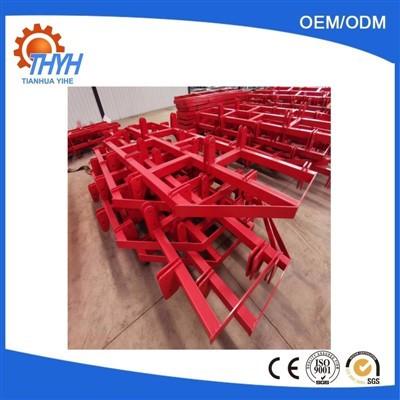
In conclusion, mooring plates are an essential part of keeping boats and other marine structures safe and secure in strong currents. By choosing the right size, shape, and material, and by ensuring proper installation and maintenance, you can ensure that your mooring plates will be able to handle even the toughest conditions. So, if you’re looking for high-quality mooring plates, give us a call and let’s start the conversation.
Metal Fabrication References:
- Marine Engineering Handbook
- Coastal Engineering Manual
Qingdao Tianhua Yihe Foundry Factory
We’re well-known as one of the leading marine-steel-structural-parts manufacturers and suppliers in China. With a professional production team, we are able to meet the needs of the majority of our customers. Please rest assured to buy customized marine-steel-structural-parts from our factory.
Address: XIAOBUHOU INDUSTRIAL ZONE, NANQUAN TOWN, JIMO DISTRICT, QINGDAO CITY, CHINA
E-mail: andywang@qdthyhmetalfab.com
WebSite: https://www.qdthyhmetalfab.com/
