Hey everyone, and welcome back to the blog! If you’ve been thinking about going solar—whether for your home, small business, or even a larger project—you’ve probably asked yourself this: how much space do solar panels actually need? As a solar panel supplier, I get this question all the time—usually from homeowners who have a tiny backyard, café owners with a flat roof, or folks who think they need a huge field to make this work. Let’s break this down like we’re chatting over coffee—no jargon, just real numbers and practical stuff you can use. Solar Panel
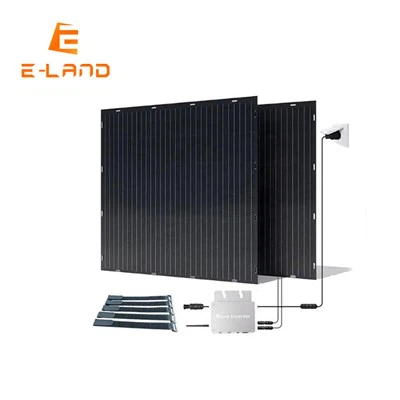
First off, let’s get one thing straight: there’s no one-size-fits-all answer. The space a solar panel setup needs depends on three big things: how much electricity you actually use, how efficient your panels are, and the angle/sun exposure of where you’re putting them. Let’s start with the basics: a single solar panel. Most standard residential panels you’ll find (the ones we stock) are about 17 square feet each—like 65 inches long, 39 inches wide. That’s roughly the size of a king-sized bed, for reference. A typical home solar system for a 1,500 kWh monthly usage (that’s the average in the US, by the way) uses 15 to 20 of these panels. So that’s, quick math, around 255 to 340 square feet of space—about the size of a one-car garage. Wait, that’s way smaller than I thought when I first got into this business! But hold up—efficiency matters here.
Not all panels are created equal. A few years back, the average panel efficiency was around 15-18%—meaning only 15-18% of the sun’s energy that hits it turns into electricity. Now, we have high-efficiency panels that hit 22-24%—those are the ones we push for if space is tight. A high-efficiency panel generates more power in the same amount of space, so you need fewer of them. Let’s say you go with a 24% efficient panel vs. a 16% one: for the same 1,500 kWh monthly need, you’d only need 13-14 high-efficiency panels instead of 18-19 standard ones. That cuts your required space by almost 20%—huge if you’re working with a small roof. For example, if you have a 300 sq ft roof area, you can easily fit enough high-efficiency panels to cover average home use. If your roof is only 200 sq ft? No problem—just grab even more efficient panels, which we have in stock too.
Next, sun exposure is make-or-break. A panel might fit technically, but if it’s shaded by a tree at 2 PM every day, or facing north instead of south (in the Northern Hemisphere), it’s not going to perform like we calculated. We always tell customers: if your space is only getting 4 hours of direct sun a day (that’s low), you’ll need 30% more panels. If it’s getting 6+ hours (that’s ideal), you might need 10-15% less. So that one-car garage roof? If it’s facing south and unshaded, perfect. If it’s facing west and has a big oak tree in the way, you might need a bit more space, or we can suggest microinverters to help with shading (another thing we supply).
Wait, what if you don’t have a roof? Lots of people think they need a big yard for ground-mounted panels. But ground mounts can be tilted to catch the most sun, and if you have a small yard, you can even stack them on racks that are spaced just right. For example, a 1,000 sq ft backyard can fit a system that generates enough power for a 2,000 kWh monthly use—no need for a football field. We had a customer last year who had a 800 sq ft side yard behind their small home; we designed a ground-mount setup there that covered their entire electricity bill, plus a little extra to sell back to the grid. He was shocked he didn’t need more space.
What about commercial spaces? A café with a 1,000 sq ft roof can fit around 50 panels, which would generate enough power to cover their monthly electric bill (usually 2,000-3,000 kWh for a small café). A warehouse with 10,000 sq ft of roof space? That’s enough for 500+ panels, which could power the whole warehouse plus maybe the adjacent parking lot with solar-powered lights. We’ve done a few small retail setups where the owner was worried their roof was too small—turns out, they just needed high-efficiency panels instead of the basic ones they were looking at.
Now, let’s get to the numbers you can actually write down, no fluff. Let’s take common usage cases:
- Tiny home (500 kWh/month): ~7 panels, 119 sq ft (that’s like a walk-in closet)
- Average US home (1,500 kWh/month): ~15 panels, 255 sq ft (one-car garage)
- Large family home (2,500 kWh/month): ~25 panels, 425 sq ft (half a two-car garage)
- Small café (2,000 kWh/month): ~20 panels, 340 sq ft (closet + a little extra)
But wait—don’t forget spacing between panels. You can’t just stack them all together like firewood. You need 1-2 feet of space between rows for ground mounts, and a few inches for roof mounts (so air can circulate, which keeps panels cooler and more efficient). So if you’re doing ground mounts, that adds a bit of space—for the 1,500 kWh system, that might go from 255 sq ft to 300 sq ft, still way less than most people expect.
I get it, some of you are thinking: “But I have a tiny roof, can I even do this?” Let’s use a real example from a customer of ours last month. She had a 200 sq ft roof on her 1,200 sq ft home, and she was convinced she couldn’t go solar because her neighbor’s roof was twice as big. We brought a sample high-efficiency panel, measured her roof, and realized she could fit 12 of our 24% efficient panels. That’s 204 sq ft, with a bit of extra space left for vents. Those 12 panels generate around 1,200 kWh a month—perfect for her smaller home, and she qualifies for the local solar rebate too. She texted me a week later saying her first energy bill was 80% lower. That’s the stuff that makes this job worth it.
What about if you want to use solar for something else, like powering a shed or an RV? A small 100-watt panel is only about 10 sq ft, so you can fit 10 of those in a 100 sq ft area, easily powering a shed’s lights and a fridge. For an RV, you don’t need a lot of space either—most RVs have roof space for 2-4 panels, which is enough to run your basics when you’re off-grid.
Now, let’s talk about mistakes people make when calculating space. The biggest one is not accounting for shading. I had a customer once who measured his roof, bought 20 panels, and they barely produced half the power we quoted. Turns out, a big tree that he didn’t think about shades half his roof at midday. We adjusted his system to fewer, more efficient panels and added a shade-tolerant inverter, and now it works great. So always do a quick sun check: stand where you want to put the panels at solar noon (around 1 PM in summer, 12 PM in winter) and see if anything is blocking the sun. If yes, we can help adjust the design.
Another mistake: buying cheap, low-efficiency panels to save a buck. They might be cheaper per panel, but they take up more space. If you have a 200 sq ft roof, cheap 15% efficiency panels would need 16 panels (272 sq ft) which won’t fit—you’ll end up wasting money on panels you can’t use. We always tell customers: calculate space first, then pick the efficiency that fits, instead of the other way around.
So, what’s the takeaway here? You don’t need a huge estate or a massive roof to go solar. For most residential and small commercial setups, the space required is way smaller than you think—usually between 150-500 sq ft, depending on your usage and panel efficiency. The key is to work with a supplier who can help you calculate the right setup for your exact space, not just push the biggest system they can.

If you’re ready to figure out how much space you have and what solar setup works for you, we can help. Just reach out to our team to get a quick, no-obligation quote—we’ll come out to measure your space, check sun exposure, and design a system that fits your needs, not a generic one. No pressure, just straight talk about what will work for you.
On Grid Solar Power System References:
- International Energy Agency. (2023). Solar Photovoltaic System Efficiency Trends.
- U.S. Energy Information Administration. (2024). Average Monthly Residential Electricity Consumption by Region.
- Solar Energy Industries Association. (2023). Ground-Mount Solar System Space Requirements.
- National Renewable Energy Laboratory. (2022). Shading Impacts on Solar Panel Performance.
Hangzhou Huakun New Energy Equipment Co., Ltd.
As one of the most professional solar panel manufacturers and suppliers in China, we’re featured by quality products and good service. Please rest assured to wholesale bulk durable solar panel made in China here from our factory. We also accept customized orders.
Address: International Export Office, Huaxin Development Building B, Wener Road No.328, Westlake District, Hangzhou, China
E-mail: linda@hzhuakun.com
WebSite: http://www.hk-newenergy.net/
