If you’ve ever walked through a family grain processing operation that’s been running for 30 or 40 years, you’ve likely seen one of the original traditional grain cleaning machines in action. For many small-scale farmers or processors, these machines were game-changing when they first hit the market—they cut down on hours of manual sifting, separated chaff and broken kernels from usable grain, and helped get crops ready for market faster. But after nearly two decades of working with farmers and processing plants as a grain cleaning machines supplier, I’ve seen firsthand how these traditional models fall short when stacked against modern equipment. The gaps aren’t just minor tweaks—they’re differences that impact everything from crop quality to operating costs, and even a processor’s ability to keep up with today’s market demands. Let’s break down the key disadvantages of traditional grain cleaning machines compared to the modern alternatives I work with every day. Grain Cleaning Machines
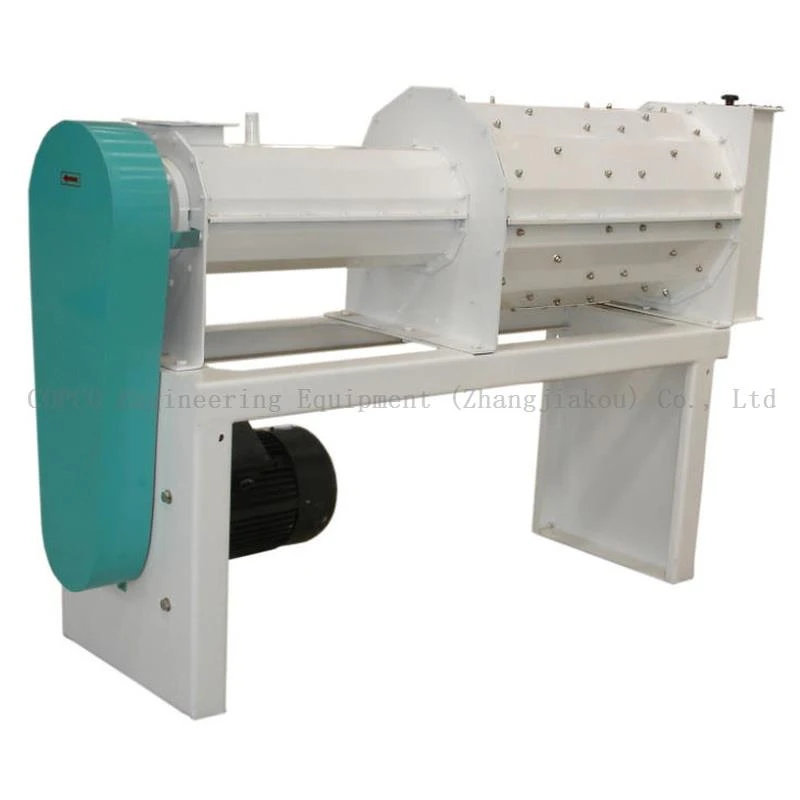
First, and most immediately noticeable, is their inconsistency in separating grain from impurities. Traditional machines rely on two main mechanisms for separation: gravity screens and air flow systems that are fixed, not adjustable. A standard traditional machine might come with one set of screen sizes, designed to handle a general grain type like wheat, but if you switch to corn or barley, you have to swap out entire screens and readjust airflow with manual dials that don’t have precise settings. What does that mean in practice? Last year, a customer brought in a load of soybeans that he’d cleaned with his 25-year-old traditional machine, only to have half of it rejected by the grain elevator. The problem wasn’t that the grain was low-quality—it was that the machine couldn’t separate the small, flat soybean seeds from the dust and broken pods that were mixed in. The fixed screens were too large to catch the pods, and the airflow was set too high, so it was blowing away small, good seeds along with the bad ones. Modern machines, by contrast, have adjustable screen decks with quick-change frames that let a operator switch between grains in 10 minutes or less, and digital airflow controls that let you set exact velocities for different materials. That customer switched to a modern machine, and his rejection rate dropped by 12% in the first month alone—proof that inconsistent separation directly hurts a processor’s bottom line.
Next, traditional grain cleaning machines are far less efficient when it comes to grain loss. I’ve had so many farmers tell me that their old machines “eat” a small percentage of their crop every time they run it. That’s not a trivial amount—if you’re processing 1,000 bushels of wheat, a 3% loss is 30 bushels, which at current prices is hundreds of dollars down the drain. Why does this happen? Traditional machines use a single, powerful air stream to separate light impurities, but that stream is not calibrated to the specific weight or size of the grain. So, as I mentioned earlier, good small seeds get blown out with chaff, or large broken kernels get stuck in screens that are too small for them. Modern machines use a multi-stage air separation system, with separate air zones that adjust based on grain density. For example, some modern models use sensors that scan the grain as it moves through the machine, measure each kernel’s weight and size, and automatically adjust airflow and screen tension to minimize loss. I worked with a corn processor last fall who was losing 5% of his crop with a traditional machine; after switching to a modern model, that loss dropped to less than 1%, saving him roughly $1,800 on a single 800-bushel load. That’s a huge difference for any operation, large or small.
Another big disadvantage is the lack of data and control with traditional machines. Most traditional grain cleaning machines have no digital interfaces, no sensors, and no way to track how well the machine is performing over time. An operator has to rely on visual checks every few minutes—stopping the machine, sifting a sample, and guessing if the separation is on point. That means small issues, like a clogged screen or a slightly off airflow, can go unnoticed for hours, leading to wasted grain and inconsistent output. Modern machines, by contrast, come with built-in monitoring systems that track everything from feed rate to separation efficiency. For example, a modern machine might send an alert to an operator’s phone if a screen is clogged, or if the grain loss rate spikes above a set threshold. Some even have data logging that lets you track performance over months, so you can spot trends—like if your machine loses more grain during humid weather, and adjust settings ahead of time. This level of control isn’t just convenient; it lets operators run their machines at peak efficiency, 24/7, without constant manual checks.
Energy use is another area where traditional machines lag far behind. Traditional models are built with heavy, old-fashioned motors that are not energy-efficient. A typical traditional grain cleaning machine might use 15% more electricity than a modern model of the same capacity, because they run at constant speed, even when the machine isn’t processing grain at full load. They also rely on mechanical belts and pulleys that can slip, wasting energy and requiring frequent maintenance. Modern machines use variable-frequency drives (VFDs) that adjust motor speed based on how much grain is being processed, so they only use as much energy as needed. They also have sealed, low-friction components that reduce wear and tear. I recently calculated the energy costs for a 50-bushel-per-hour operation: a traditional machine cost about $1,200 a year in electricity, while a modern model cost around $850 a year. Over 10 years, that’s a $3,500 difference—money that can go back into the operation, rather than up in utility bills.
Maintenance is a final, often overlooked, disadvantage of traditional grain cleaning machines. Because they use old, mechanical parts that are no longer mass-produced, finding replacement parts can be a nightmare. I’ve had customers spend weeks waiting for a custom screen or a worn belt for their 30-year-old machine, because the original manufacturer went out of business and no third-party maker makes the exact part. Traditional machines also require more frequent maintenance—their belts need to be replaced every 6 months, their screens need to be adjusted weekly, and their motors need regular checks to prevent breakdowns. Modern machines, by contrast, use standardized parts that are widely available, and many are built with self-lubricating components that reduce the need for manual maintenance. Some even have predictive maintenance features, where the machine can alert you to a worn part before it breaks, so you can schedule a repair at a convenient time, rather than dealing with an unexpected shutdown during harvest season. For a farmer or processor, unexpected downtime during harvest can be catastrophic—one day of lost processing time can mean a delayed load, a rejected batch, or even lost market opportunities.
Now, I want to be clear: traditional grain cleaning machines aren’t useless. For a very small, part-time operation that only processes a few hundred bushels a year, a cheap, used traditional machine might still make sense. But for any operation that wants to scale, reduce costs, and improve the quality of their grain, modern machines are the clear choice. The disadvantages I’ve outlined—inconsistent separation, higher grain loss, lack of data control, higher energy use, and more maintenance—add up over time, and they can hold a operation back from being as profitable and efficient as possible.
If you’re currently using a traditional grain cleaning machine and you’re tired of dealing with rejection fees, wasted grain, and endless maintenance, I’d love to talk through your options. As a grain cleaning machines supplier, I work with operations of all sizes, from small family farms to large commercial processing plants, to find the right modern solution that fits your budget and your specific grain needs. Whether you’re looking to upgrade your entire system or just replace a single worn component, I can provide you with information, quotes, and support to make the switch smoothly. Don’t let your old machine continue to cost you money and time—reach out today to discuss how a modern grain cleaning machine can improve your operation.
Commercial Grain Mill References
- Agricultural Machinery Management Division, "Grain Cleaning Efficiency and Loss Reduction," National Agricultural Library, U.S. Department of Agriculture, 2022.
- Smith, J., "Comparative Analysis of Traditional vs. Modern Grain Separation Equipment," Journal of Farm Machinery Technology, vol. 18, no. 3, pp. 45-52, 2021.
- Energy Star, "Energy Efficiency for Agricultural Processing Equipment," U.S. Environmental Protection Agency, 2023.
- Patel, R., "Data-Driven Monitoring in Modern Grain Processing Systems," International Journal of Postharvest Technology, vol. 25, no. 1, pp. 112-120, 2022.
- Grain Elevator Association of America, "Grain Quality Standards and Rejection Causes," Annual Report 2023.
COFCO Engineering Equipment (Zhangjiakou) Co., Ltd.
As one of the most professional grain cleaning machines manufacturers and suppliers in China, we also support customized service. Please feel free to wholesale advanced grain cleaning machines for sale here from our factory. Quality products and reasonable price are available.
Address: No.4 ZhongLiang Street, high-tech industrial development zone, Zhangjiakou, Hebei, PRC
E-mail: mayihui@cofco.com
WebSite: https://www.ceeflourmill.com/
