Hey everyone, let’s cut to the chase – as a specialty gas compressor supplier, I get asked this question all the time: can our gear actually work offshore? It’s not like onshore facilities where you’ve got space to breathe, stable power, and no salt air eating at your equipment. Offshore rigs, FPSOs, subsea processing platforms – those are whole different ballgames, right? Most people assume specialty gas compressors are made for clean, controlled onshore labs or manufacturing plants, not for environments that feel like they’re actively trying to destroy your hardware. But I’m here to tell you, yeah, they can work – if you pick the right ones, and you work with someone who knows both specialty gases and offshore chaos. Specialty Gas Compressor
First, let’s ground this in what specialty gases even are, because that’s half the confusion. Specialty gases aren’t just your run-of-the-mill nitrogen or oxygen (though those count too). We’re talking high-purity argon, helium, hydrogen, rare earth gases – stuff used in semiconductor manufacturing, medical devices, aerospace, even green energy projects like hydrogen fuel cells. The thing about these gases is, they’re super sensitive to contamination. A single particle of dirt, moisture, or even trace corrosion in the compressor line can ruin an entire batch of high-value gas, which is why specialty compressors are built tighter than a drum – seals are precision-machined, materials are corrosion-resistant, and there’s zero room for cross-contamination. That tight build, though, makes people nervous for offshore, where conditions are anything but controlled. Salt spray, constant vibration, temperature swings that go from scorching midday to freezing at night, and maybe even the occasional rough sea pounding the platform – all of that feels like it would throw a precision compressor way off. But here’s the part most laypeople miss: offshore operations don’t just use regular crude and natural gas anymore. A lot of them are using specialty gases too, especially for things like enhanced oil recovery (EOR), leak detection, and even processing the hydrogen that’s becoming a big offshore commodity.
Let’s talk EOR first. Many offshore oil rigs use carbon dioxide (CO2) for CO2 EOR, which pumps the gas into reservoirs to push out more oil. But wait, pure CO2 is a specialty gas, right? And a lot of newer projects are mixing it with high-purity nitrogen to adjust pressure – that’s another specialty mix. If you use a regular natural gas compressor for this, you’re going to get contamination from oil lubricants (natural gas compressors often use oil for sealing) which would mess up the CO2 and nitrogen, making the EOR less effective. Specialty gas compressors, though, use oil-free compression for most high-purity applications – that’s non-negotiable. We design them with dry gas seals or magnetic bearings that eliminate any chance of oil getting into the gas stream. And for offshore, we can harden those parts to handle the vibration – we add extra gussets to the frame, use high-grade stainless steel for the valve bodies, and even balance the rotors so they don’t shake themselves apart when the platform’s sitting in rough seas. I’ve got a customer in the North Sea that’s been using our oil-free helium compressors for their EOR project for three years now – they told me last quarter their downtime is less than 2% because of our gear, which is a huge deal for them, since every hour their rig is down costs them tens of thousands of dollars.
Then there’s hydrogen, which is the big offshore trend right now. A lot of companies are building offshore wind farms paired with hydrogen production – they use electricity from the wind to split water into hydrogen and oxygen (electrolysis), then compress the hydrogen to pipe it to shore or store it. Hydrogen is tricky because it’s super small, it’s highly flammable, and it can cause embrittlement in regular metal if you don’t use the right materials. Specialty gas compressors are built specifically for hydrogen – we use materials like 316L stainless steel or even nickel alloys that resist hydrogen embrittlement, and our compression chambers are designed with minimal dead space so there’s less chance of hydrogen leakage. Offshore, you need compressors that are safe, first and foremost – no one wants a hydrogen leak on a platform in the middle of the ocean. Our compressors have redundant leak detection sensors, ATEX certification (which is mandatory for explosive environments offshore), and explosion-proof motor enclosures that meet all the latest offshore safety standards. We’ve had two clients in the Gulf of Mexico switch from modified natural gas compressors to our specialty hydrogen compressors in the last year, and both said their safety inspections passed on the first try, which saved them a ton of time and hassle.
Wait, but let’s address the elephant in the room: why not just use offshore-rated industrial compressors? Industrial compressors for oil and gas are built for rough environments, but they’re designed for bulk gas, not high-purity specialty gases. If you’re compressing helium for a medical supply ship offshore, or argon for a shipbuilding project, you can’t have that gas mixed with methane or oil from an industrial compressor. The value is way too high – pure helium sells for like $500 a cubic meter these days, if you contaminate a whole load, that’s a six-figure loss in minutes. Specialty compressors are built to maintain purity levels of 99.999% or higher, which is non-negotiable for these applications. The key is modifying that specialty compressor design to handle the offshore environment, not ditching the precision that makes it good for specialty gases.
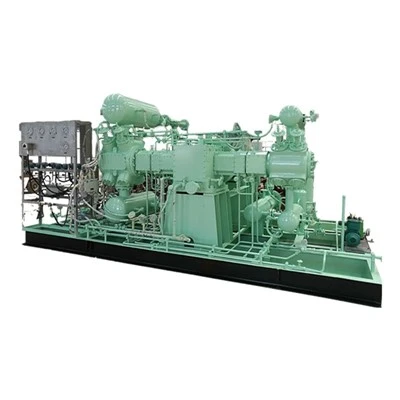
Of course, it’s not all sunshine and calm seas – there are challenges. The biggest one is space. Offshore platforms and FPSOs have super limited space, unlike onshore plants where you can build a whole room for compressors. Our specialty compressors are modular, though – we can design them to fit into tight corners, or even stack two smaller compressor units vertically if horizontal space is at a premium. We also make them skid-mounted, so they’re easy to transport when you’re moving gear to a new platform – no messy on-site assembly, which saves time and cuts down on installation errors. Another challenge is maintenance. Offshore maintenance isn’t like onshore, where you can order a part and have it delivered the same day. You’ve got to carry spare parts with you, and service has to be done by technicians who are certified to work offshore (which is a whole other certification process). Our compressors are built with easy-access panels for regular checks, and we offer remote monitoring – we can connect to the compressor from our onshore workshop, track performance, catch issues before they turn into breakdowns, and even troubleshoot without sending a technician out. That’s a game-changer for offshore, where every service call costs a fortune and takes days to schedule.
Let me give you a real example that’s not North Sea or Gulf of Mexico – I worked with a client on a floating production, storage, and offloading (FPSO) unit off the coast of Brazil, they needed to compress high-purity nitrogen for purging pipeline systems. Purging is a big deal offshore – when you install new pipes, you have to get rid of all the oxygen to prevent explosions, so they use nitrogen. A regular industrial nitrogen compressor would have left oil residue in the pipes, which would have caused issues when they started pumping crude through. They tried modifying a regular industrial compressor first, and it leaked oil into the nitrogen stream twice in the first month, causing them to shut down a pipeline for 3 days. They called us, we sent over a custom oil-free nitrogen compressor, skid-mounted, ATEX-rated, and it’s been running for 2 years straight with zero leaks. They told us that not only did they save money from not having those shutdowns, but the maintenance is way easier – the compressor only needs a once-a-month check, no weekly servicing like the modified industrial one.
So, to circle back to the original question: can a specialty gas compressor be used offshore? The answer is a resounding yes – but only if it’s designed for that exact application. You can’t take a lab-grade specialty compressor and plop it on a rig, it’ll die within a week. But when you take the core specialty features (oil-free compression, high purity, corrosion-resistant materials) and beef it up for offshore: vibration damping, ATEX or IECEx certification, modular compact design, remote monitoring, then it works perfectly. It solves problems that regular offshore compressors can’t, especially when you’re dealing with high-value specialty gases that can’t be contaminated.
If you’re working on an offshore project – whether it’s EOR, hydrogen production, pipeline purging, medical gas supply for a floating hospital ship, even semiconductor manufacturing that’s moving offshore to cut costs – and you’re struggling with finding a compressor that can handle both the offshore environment and the purity you need, let’s chat. I’ve spent the last 10 years designing specialty compressors for all kinds of environments, and I’d be happy to walk through your project, figure out what works, and give you a quote that makes sense. No pushy sales stuff, just real talk about what will actually hold up offshore, not just on paper.

Wait, one last thing I should mention: compliance. Offshore operations are heavily regulated – every piece of equipment has to meet specific safety and environmental standards. Our compressors are all third-party tested and certified to meet all the major offshore standards, so you don’t have to worry about failing a safety audit or getting fined. That’s a huge weight off your shoulders, because audit days are already stressful enough without your main compressor being the one thing that fails.
Screw Gas Compressor At the end of the day, offshore is tough, but specialty gas compressors don’t have to be a liability. They’re actually the perfect solution for a lot of the specialty gas needs that offshore operations have these days – you just have to work with a supplier who knows both how to build a top-tier specialty compressor and how to adapt it for the rough offshore conditions. If you’re tired of dealing with compressors that either can’t handle the purity or can’t handle the sea air, reach out and let’s talk through your project. We can even do a site assessment if you want, to see exactly what space and conditions you’re working with. It’s better to get it right from the start than to deal with costly fixes later.
References
- Offshore Technology Report: Compression Systems for Specialized Offshore Applications, 2022, International Association of Oil & Gas Producers (IOGP)
- Specialty Gas Compression Standards for High-Purity Industrial Processes, 2023, Compressed Gas Association (CGA)
- Safety Guidelines for Offshore Hydrogen Compression and Storage, 2021, International Electrotechnical Commission (IEC)
- North Sea Offshore Reliability Data for Precision Industrial Equipment, 2022, Oil and Gas UK
Shanghai Sollant Energy Saving Technology Co., Ltd.
As one of the most professional specialty gas compressor manufacturers and suppliers in China, we’re featured by quality products and good service. Please rest assured to buy bulk durable specialty gas compressor from our factory. Welcome to view our website for more information.
Address: No.215, Songri Center, Beihongqiao, Jiading District, Shanghai, China.
E-mail: info3@sollant.com
WebSite: https://www.sollant-gas.com/
