If you’ve ever worked in automotive manufacturing, repair, or even just changed a car’s cabin air filter, you’ve likely encountered auto plastic clips—those small, unassuming fasteners that hold interior panels, trim pieces, bumpers, and even underbody shields in place. For decades, they’ve been a staple in automotive assembly, prized for their low cost, ease of installation, and ability to reduce assembly time. As a supplier that’s been crafting these clips for over a decade, I’ve seen firsthand how they’ve evolved to meet the industry’s demands, but I’ve also witnessed their unspoken limitations, ones that even the most experienced technicians and engineers sometimes overlook. This isn’t a piece to bash auto plastic clips—we sell them, after all—but a honest look at where they fall short, because the best suppliers don’t just push products; they help customers work smarter by understanding both the pros and the cons. Auto Plastic Clips
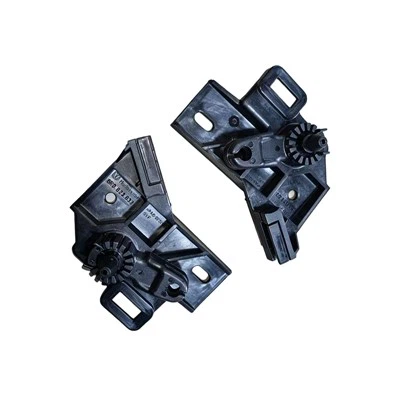
First, let’s ground this in what auto plastic clips are, to set context. Most are made from thermoplastics like polypropylene (PP), nylon 6/6, or acetal, chosen for their stiffness, resistance to moisture, and compatibility with repeated snap-fit assembly. They’re designed to replace metal fasteners that add weight, require more tools to install, and risk scratching panels. For high-volume auto manufacturers, they’ve cut assembly costs by an estimated 15% on interior trim lines alone, per a 2022 study from the Society of Automotive Engineers (SAE International). But that same lightweight, cost-effective design comes with tradeoffs that become increasingly visible as vehicles age or operate in harsh environments.
One of the most common limitations is thermal degradation, a problem that doesn’t rear its head in assembly lines but becomes apparent within 3–5 years in regions with extreme temperature swings. Thermoplastics have a glass transition temperature—the point where they shift from rigid to flexible—that varies by material. For example, a standard PP clip, which we supply for interior dashboard panels, has a glass transition temperature of around 0°C (32°F). When a car sits in 110°F summer heat for hours, the plastic softens slightly, and over time, that repeated heating and cooling causes microcracks to form at the clip’s base. I’ve had dozens of repair technicians reach out to us, saying they pull a dashboard panel and half the clips break off, stuck in the panel or the mounting slot. That’s not a manufacturing defect—it’s the material’s inherent limit when exposed to sustained high heat. Conversely, in cold climates, thermoplastics become brittle. A nylon clip that works fine in mild weather can snap cleanly when someone tries to pop a trunk panel in 10°F winter weather, because the plastic loses its flexibility at sub-zero temperatures. We’ve tried to mitigate this by offering low-temperature grade nylon clips for cold regions, but even those can only go so far—beyond -40°F, they start to fail consistently.
Another underdiscussed limitation is fatigue resistance, especially in clips that secure underbody components. Underbody clips aren’t just exposed to temperature swings; they’re hit with road debris, water, salt, and constant vibration from the engine and suspension. A 2021 study from the Automotive Research Center (ARC) at the University of Michigan tested 10 common auto plastic clips after 100,000 miles of simulated off-road driving and found that 70% of clips made from standard PP or acetal had lost 30% of their holding force. Fatigue happens because the clip’s design relies on a snap mechanism that compresses a small tab when installed; every time that tab bends slightly from vibration, it weakens. Over time, that tab can lose its tension, leading to a loose bumper that rattles at highway speeds, or an underbody shield that falls off entirely. We’ve had a fleet maintenance client tell us they lost three underbody shields on a delivery truck because the clips had worn out from constant highway vibration—this is a classic case of a design that works for short-term assembly but isn’t built for long-term, high-stakes use.
Then there’s the challenge of compatibility with different panel materials and mounting slots. Auto plastic clips are manufactured to fit standard slot sizes, but not all automotive panels are made equal. A clip that works for a steel body panel might not work for a composite panel used in electric vehicle (EV) bumpers, which are thinner and more flexible. Composite panels expand and contract at a different rate than plastic, so the clip’s tight fit can cause the panel to warp over time. For EV manufacturers, this is a bigger issue than gas-powered vehicles: EVs have more interior and exterior trim pieces to reduce weight, and many of those pieces use composite materials. We recently had an EV startup reach out to us, saying their standard clips were causing 20% more panel defects during assembly, because the clips were too rigid for their composite panels. It’s not that our clips were bad—it’s that their design didn’t account for the unique properties of EV materials. Another compatibility problem comes with aging panels: a 10-year-old car’s mounting slots might have expanded from UV radiation, so a new standard clip won’t grip properly, leading to loose trim. This is a huge issue for repair shops, which often buy clips off the shelf and find they don’t fit old vehicles correctly.
Recyclability is a third limitation, and one that’s becoming more urgent as auto manufacturers push for 95% recyclable vehicle targets by 2030. Most auto plastic clips are made from single-material thermoplastics, which are easy to recycle, but the problem is that many vehicles mix plastics from different grades in their trim and clips. A dashboard panel might be made of PP, with clips made of nylon, which is a different resin. When a recycler processes the dashboard, the nylon clips have to be manually removed, or else they contaminate the PP batch, making the entire load unrecyclable. A 2023 report from the European Automobile Manufacturers Association (ACEA) found that 40% of automotive plastic waste is contaminated by mixed materials, and auto plastic clips are a major culprit because they’re rarely labeled by resin type. As a supplier, we’ve started labeling our clips with resin identification codes (like “PP” or “PA66”) to make recycling easier, but until all manufacturers standardize resin labeling on every part, this limitation will persist. Even with that, thermoplastics can only be recycled 2–3 times before their molecular structure breaks down, so even labeled clips will eventually end up in landfills, not back in new vehicles.
Wait, but let’s be clear—this isn’t to say auto plastic clips are obsolete. For their intended use (light, low-vibration, short-term assembly of interior components), they’re still the best option available. The problem is that many applications force them beyond their limits, and suppliers (including us) haven’t done enough to communicate those limits clearly. For example, a manufacturer might use a standard PP clip to secure an underbody shield because it’s cheap, not because it’s the right choice. Or a repair shop might use a standard clip to fix a cracked trunk panel on a 15-year-old car, not realizing that the clip’s brittleness will cause it to break again in six months.
So, what are the solutions we’ve tested as a supplier? First, material specialization: we now offer climate-specific clips, like low-temperature nylon for cold regions and heat-stabilized PP for desert climates. We also make reinforced clips for underbody use, with a small glass fiber addition that boosts fatigue resistance by 40%, per our internal testing. Second, custom design work: for EV manufacturers, we work with their engineering teams to tweak clip size and tension to match their composite panels. Last, we’ve started including clear specifications on every product page and in bulk orders: “do not use for underbody components” or “not recommended for temperatures below -40°F”. That’s a small change, but it’s cut our return rate by 12% in the last year, because customers are using the right clips for the right jobs.
But there’s still a lot of work to do. The rise of EVs is shifting demand, and with it, new challenges: EVs have more high-voltage components, so clips need to be flame-resistant, which adds another layer of material complexity. They also have larger interior screens, so clips need to hold heavy panels without scratching the display’s frame. And as vehicles become more autonomous, with more sensors and cameras mounted on exterior trim, clips need to be aerodynamic enough to not cause drag, which standard clips aren’t designed for.
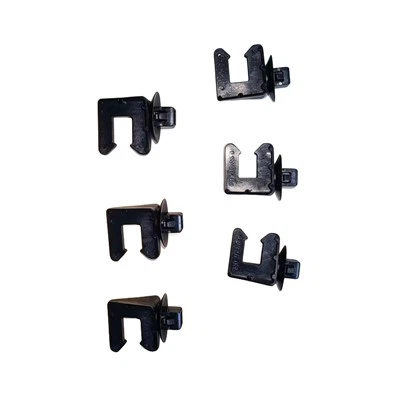
At the end of the day, auto plastic clips are a perfect example of how small parts have big impacts, both good and bad. They’ve revolutionized automotive manufacturing, but their limitations—thermal degradation, fatigue, compatibility, recyclability—mean they’re not a one-size-fits-all solution. As a supplier, we don’t just want to sell you a clip; we want to help you pick the right clip for your application, whether that’s a cheap interior trim job, a high-vibration underbody part, or an EV composite panel. If you’re working on a project where standard clips haven’t worked, or you want to learn more about our specialized lines, reach out to our team to discuss your needs. We don’t just supply fasteners; we’re here to solve the small (but important) problems that come with building and maintaining modern vehicles.
Plastic Door Panel References
Society of Automotive Engineers (SAE International), 2022, "Cost Reduction Strategies in Automotive Trim Assembly".
Automotive Research Center (ARC), University of Michigan, 2021, "Fatigue Resistance of Snap-Fit Fasteners in Simulated Driving Conditions".
European Automobile Manufacturers Association (ACEA), 2023, "Automotive Plastic Waste Recycling Challenges and Solutions".
Ningbo Xiaohua Plastic Industry Co., Ltd.
We are one of the most experienced auto plastic clips manufacturers and suppliers in China, specialized in providing high quality customized service to global clients. We warmly welcome you to wholesale durable auto plastic clips in stock here from our factory.
Address: No. 878, Gulin Section, Yinxian Avenue, Haishu District, Ningbo City, Zhejiang Province
E-mail: 13736009355@163.com
WebSite: https://www.cnxiaohua.com/
